Dream Sequence 8 — Mapping the Body
Gulangyu Island, Xiamen, China : 2025
Performance at Kulangsu Centre for Contemporary Art (KCCA)
Performance-installation (workshop-to-performance; exhibition-as-aftermath)
40 min
24-28 December 2025
This work was part of the Island Festival by Gulangyu Academy of Fine Arts that ran from 24 December 2025 to 30 December 2025.
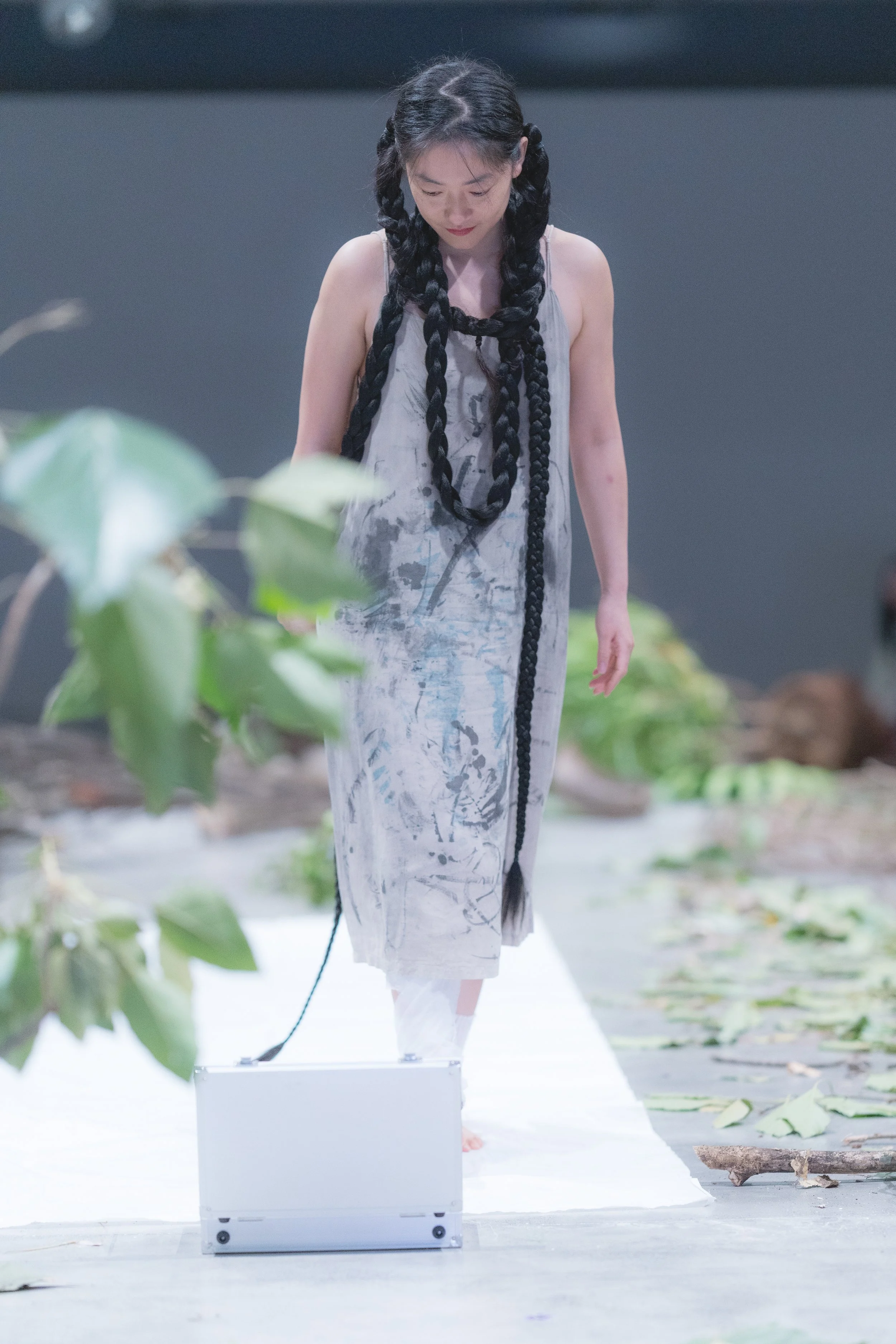
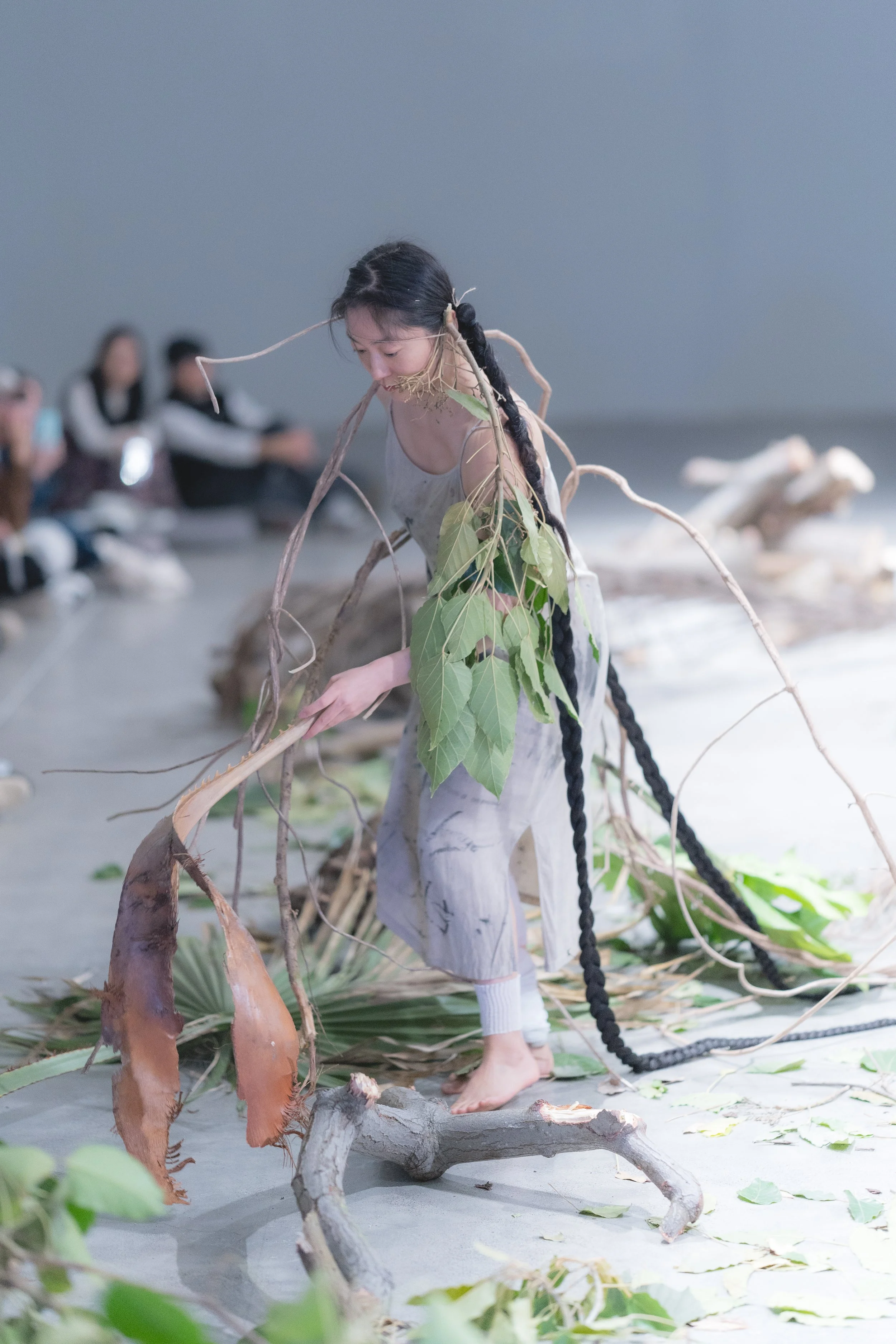
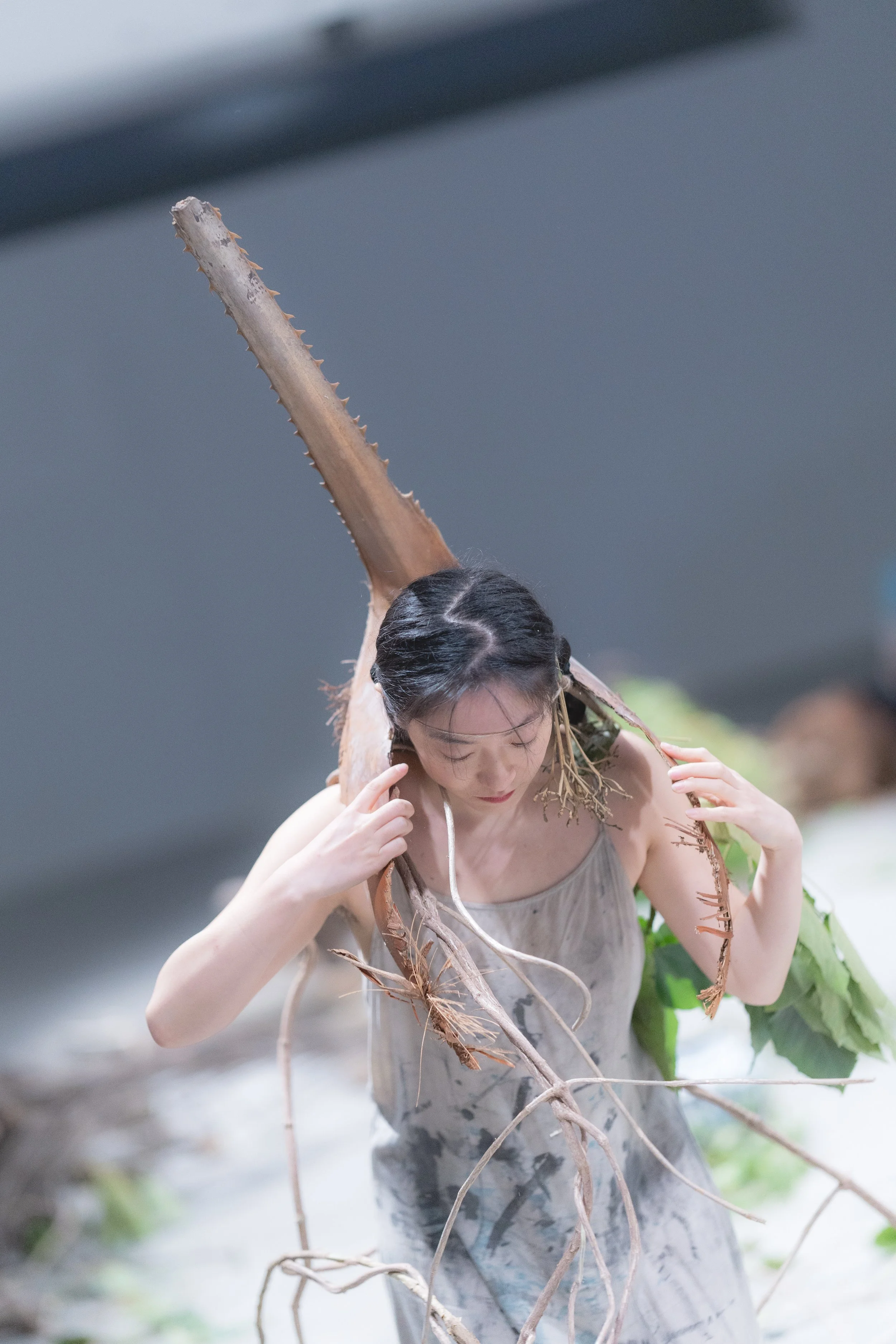
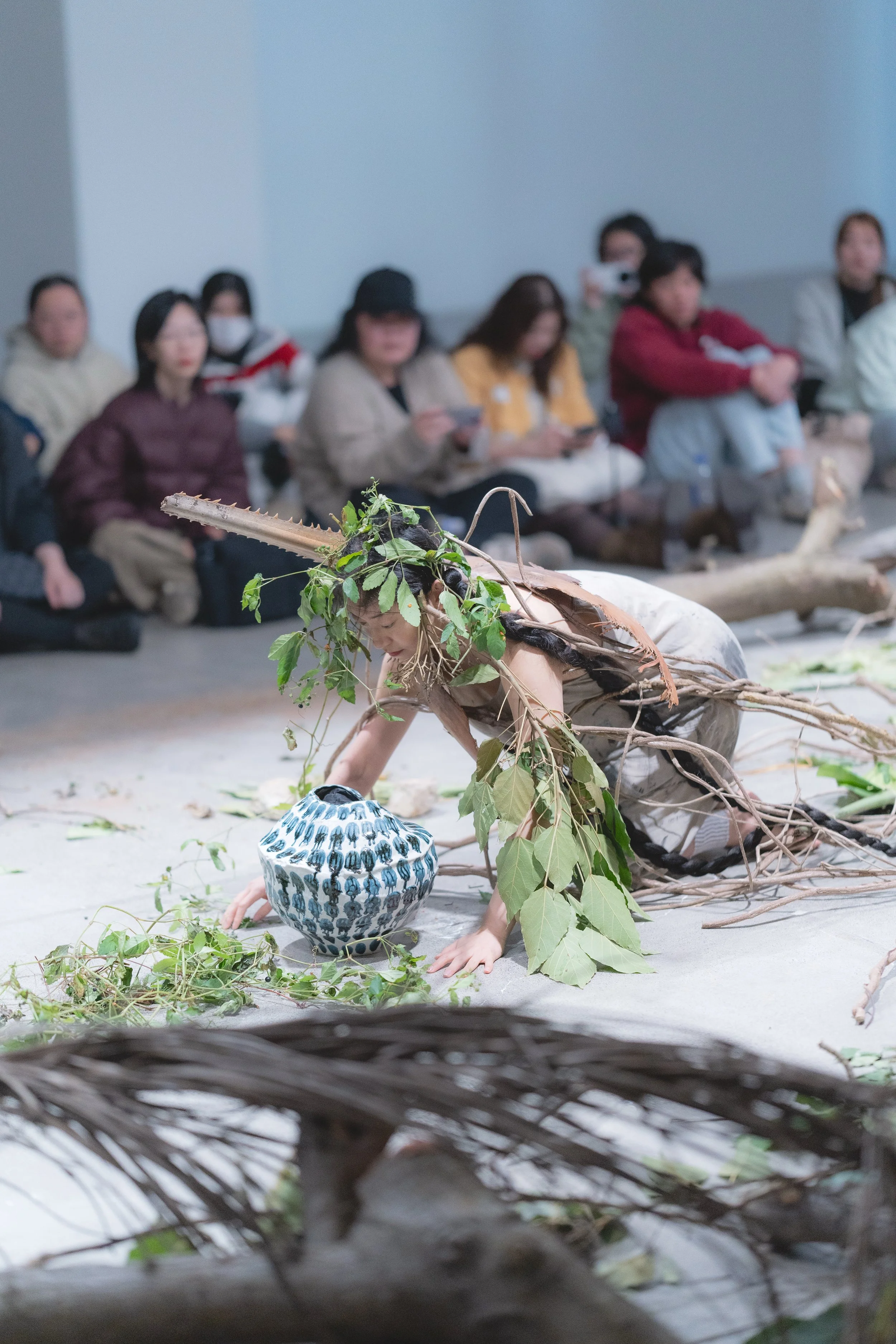
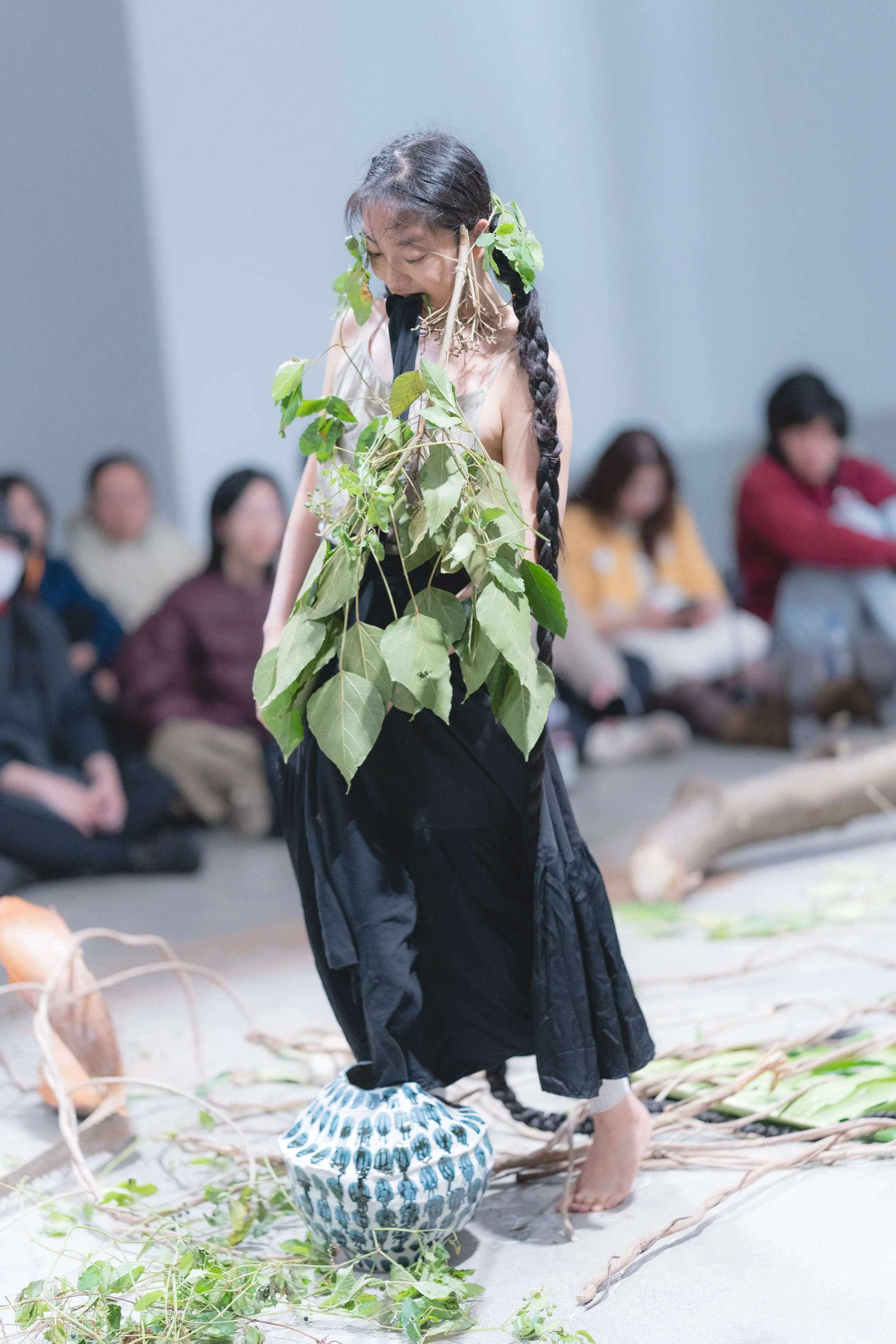
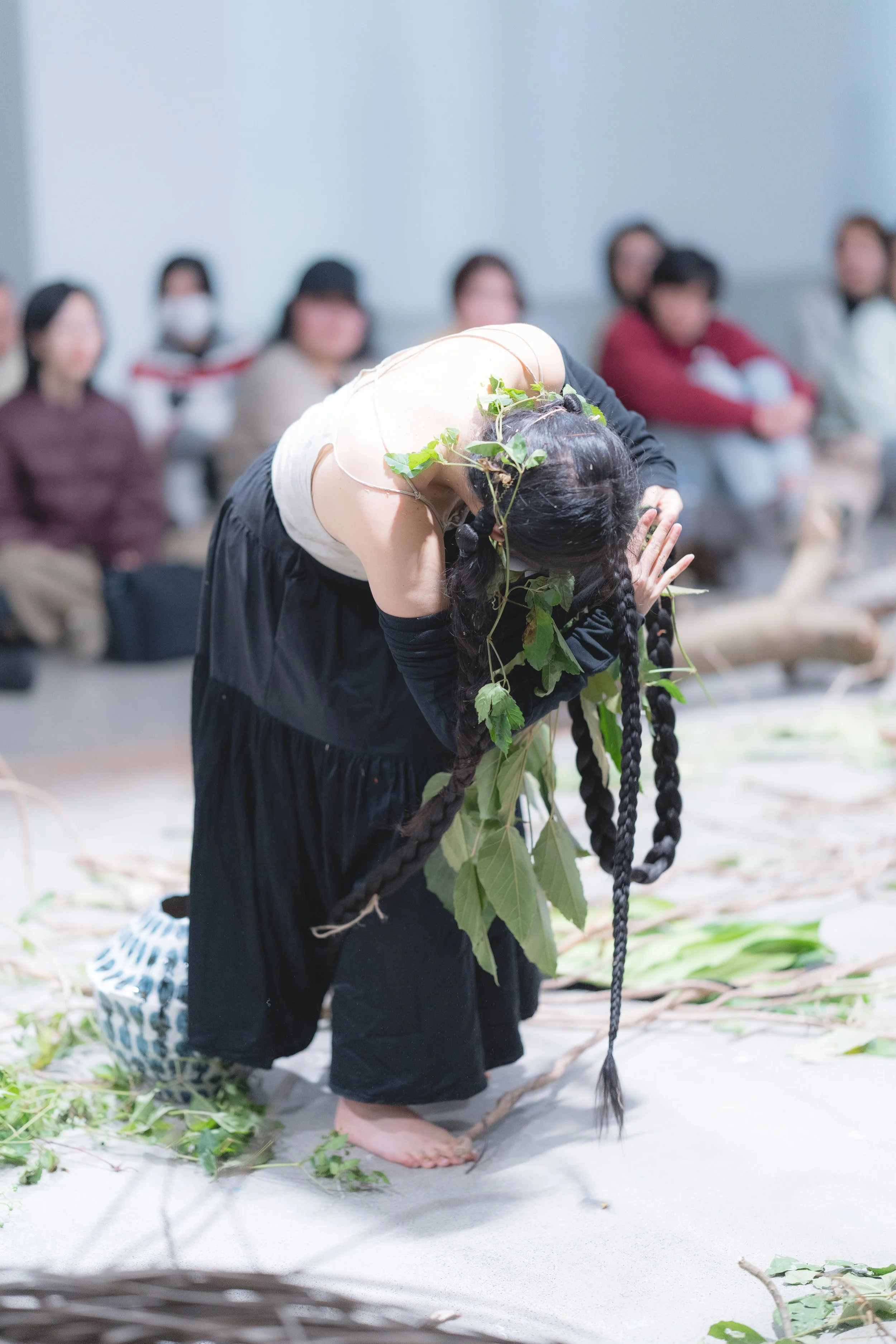
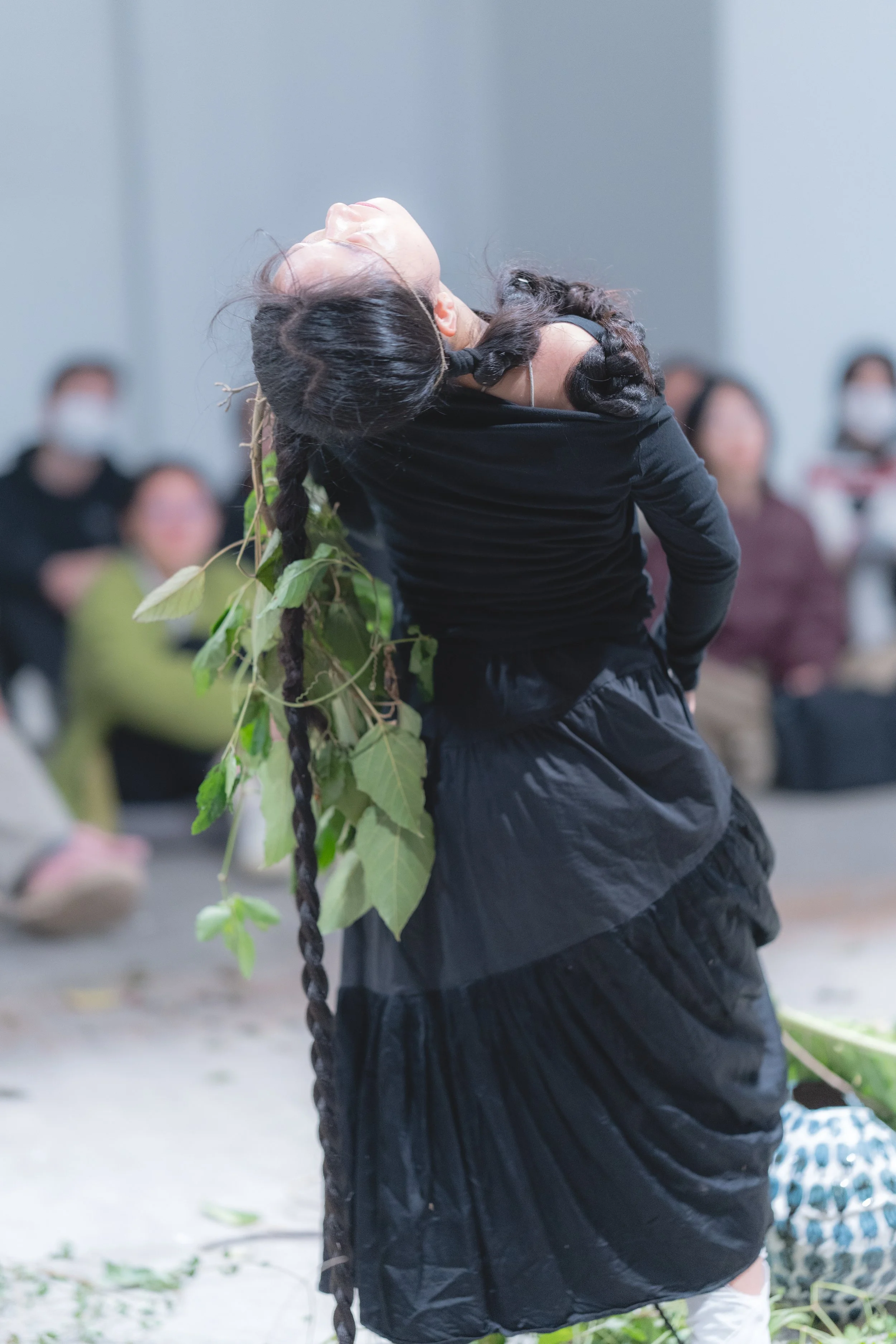
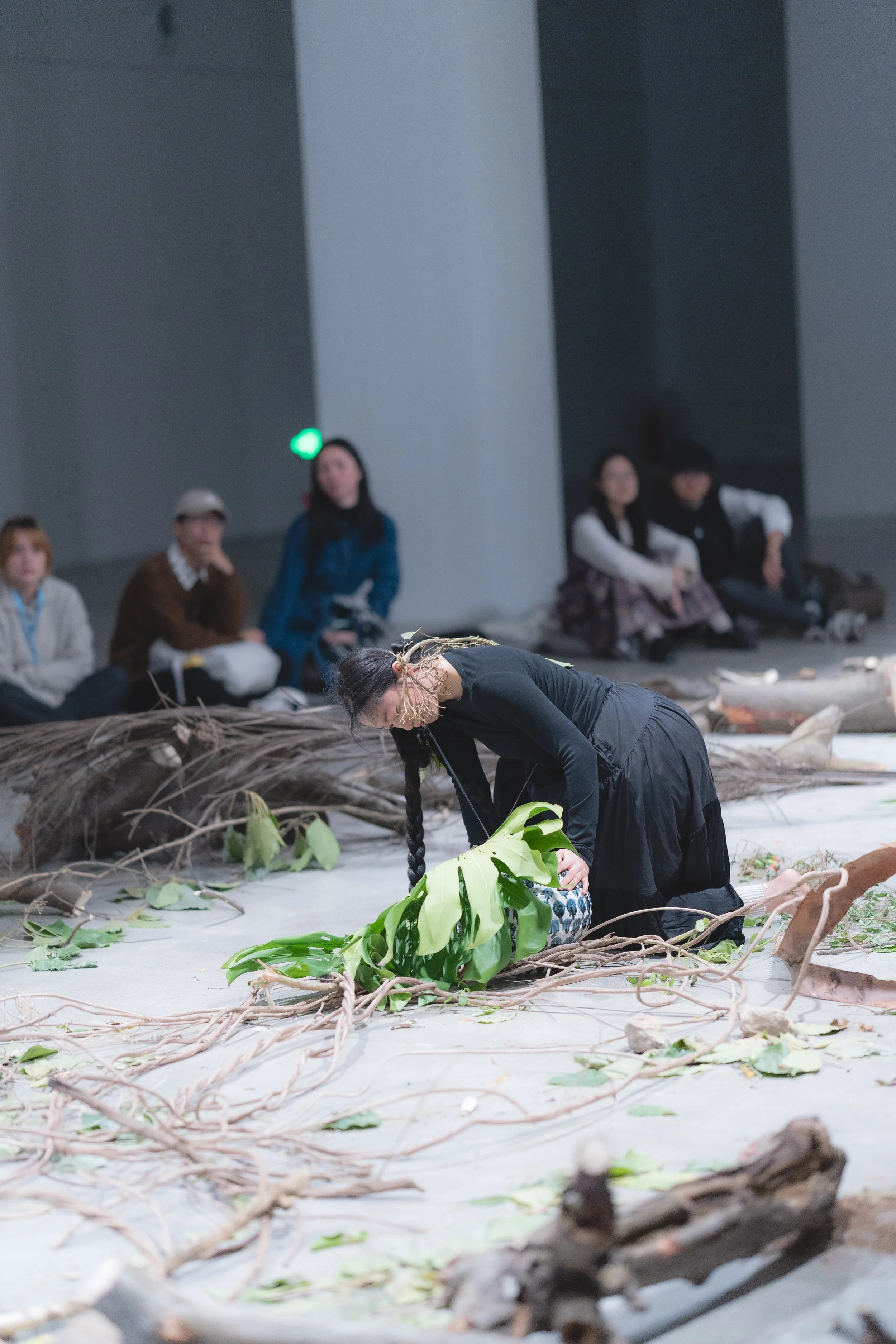
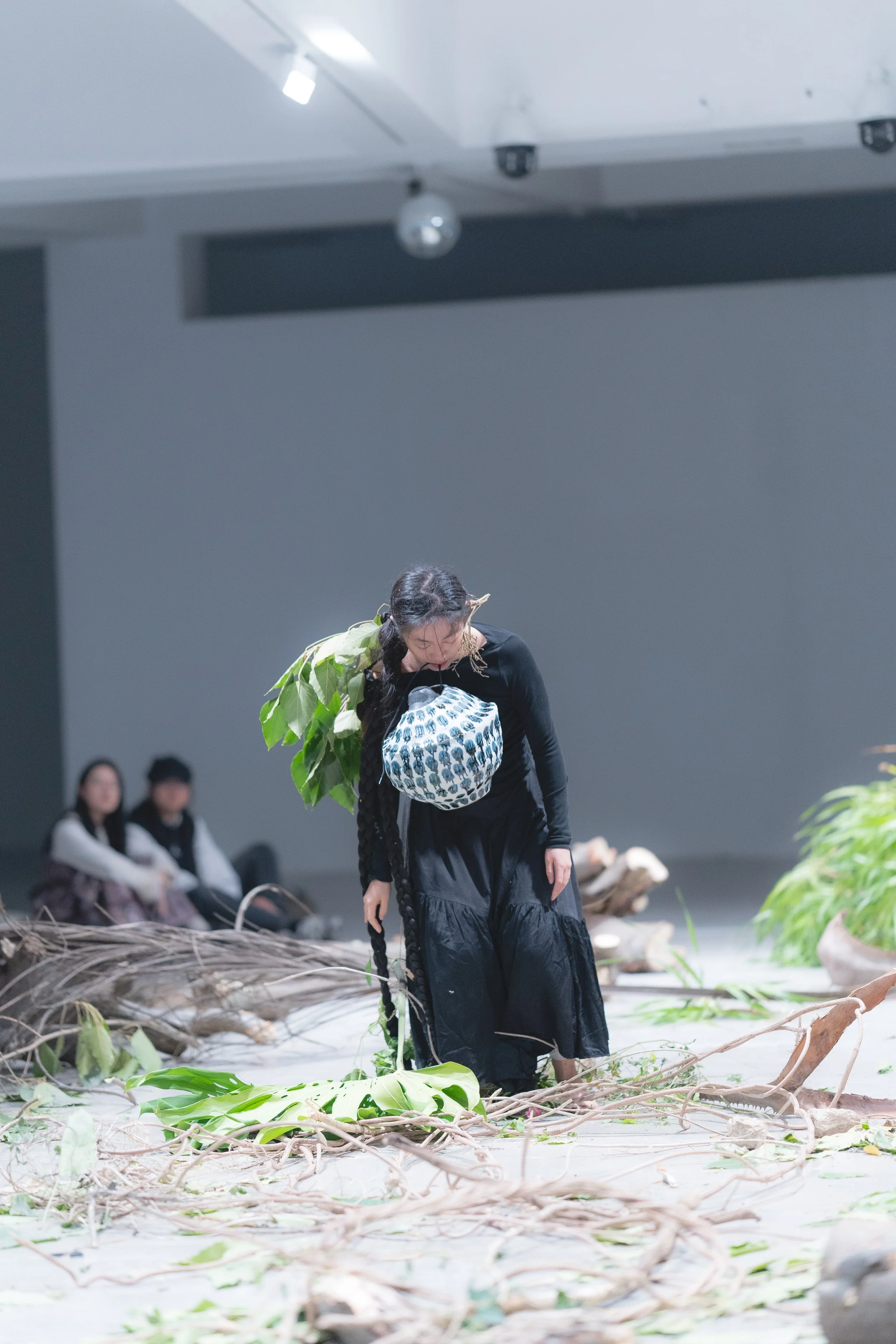
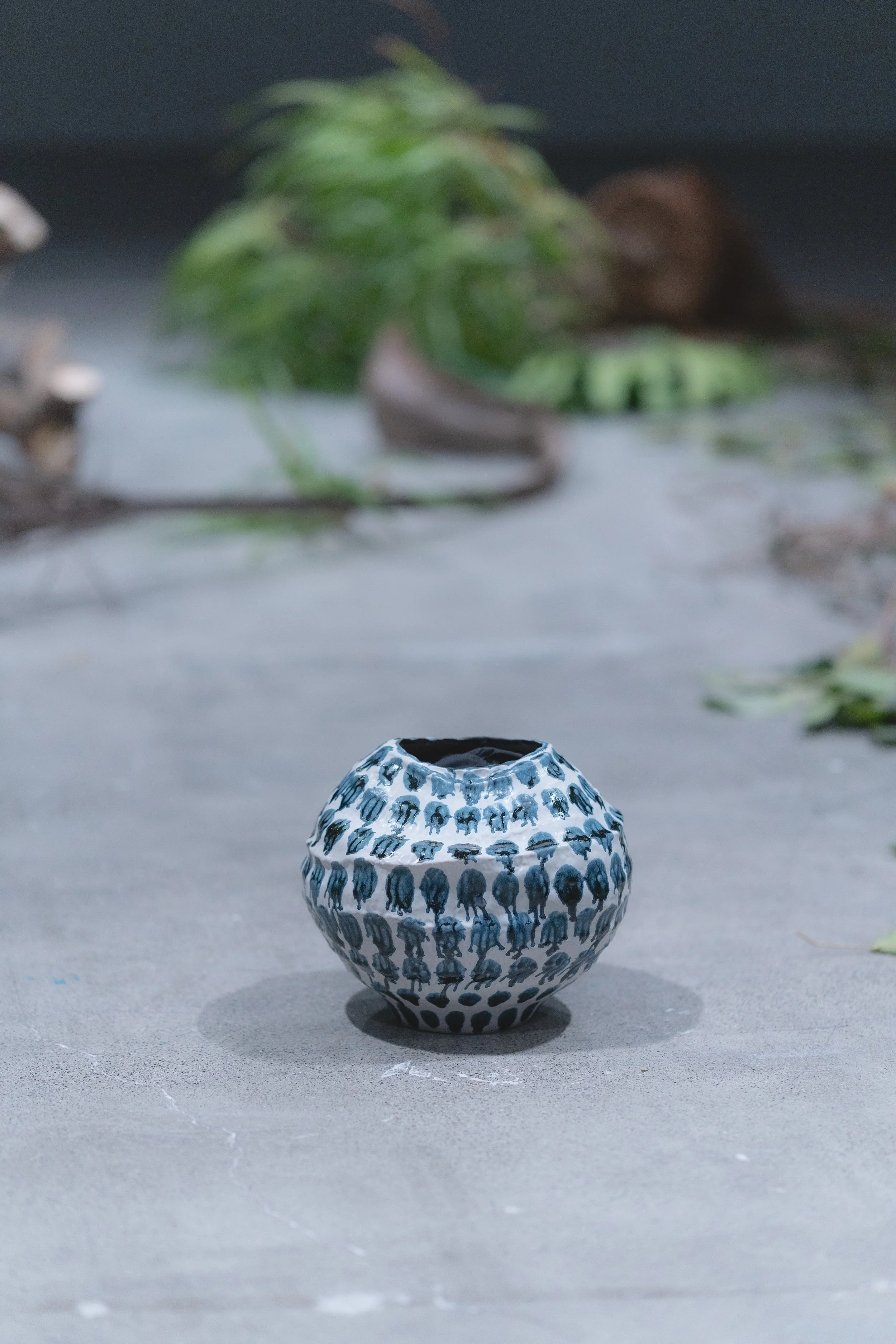
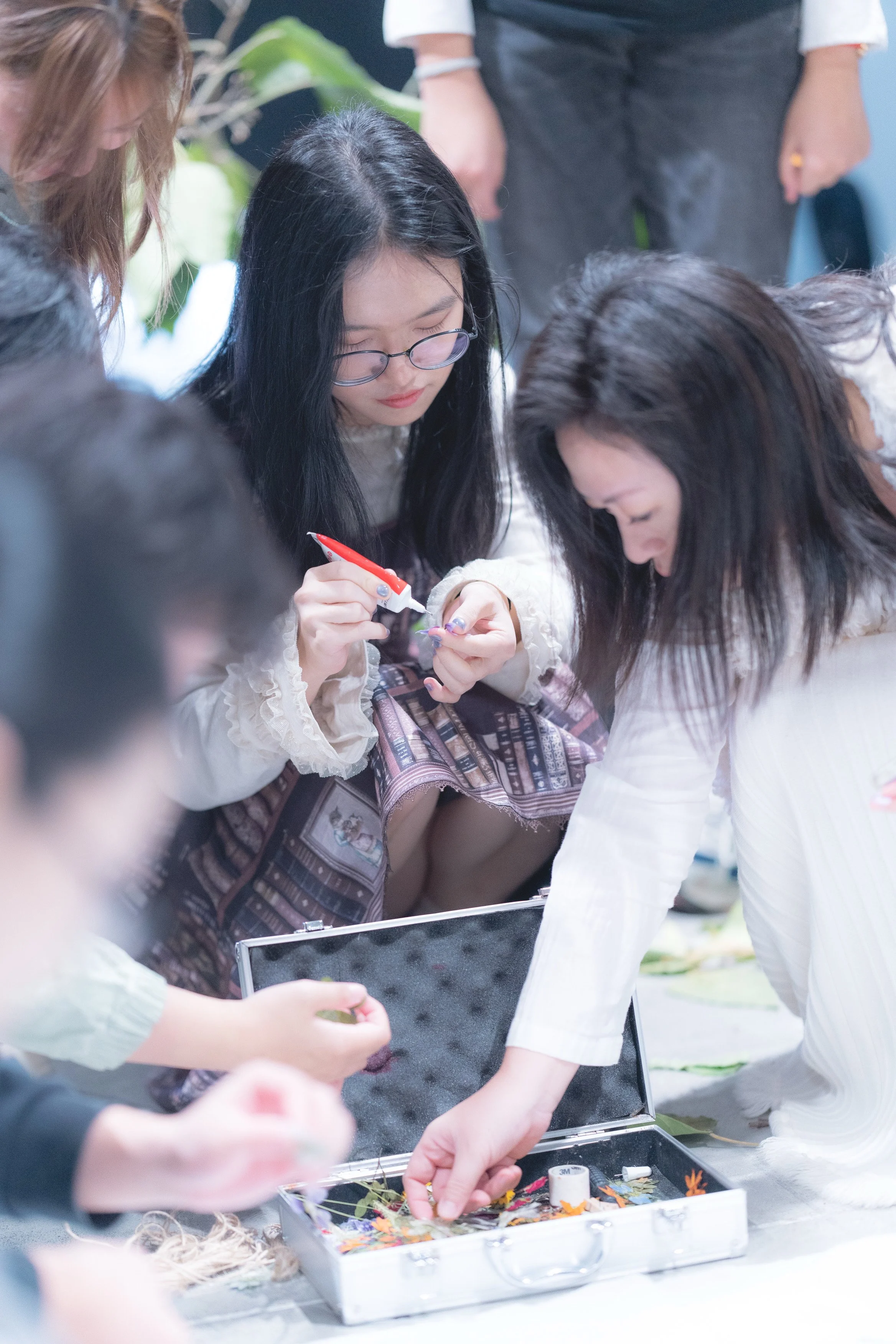
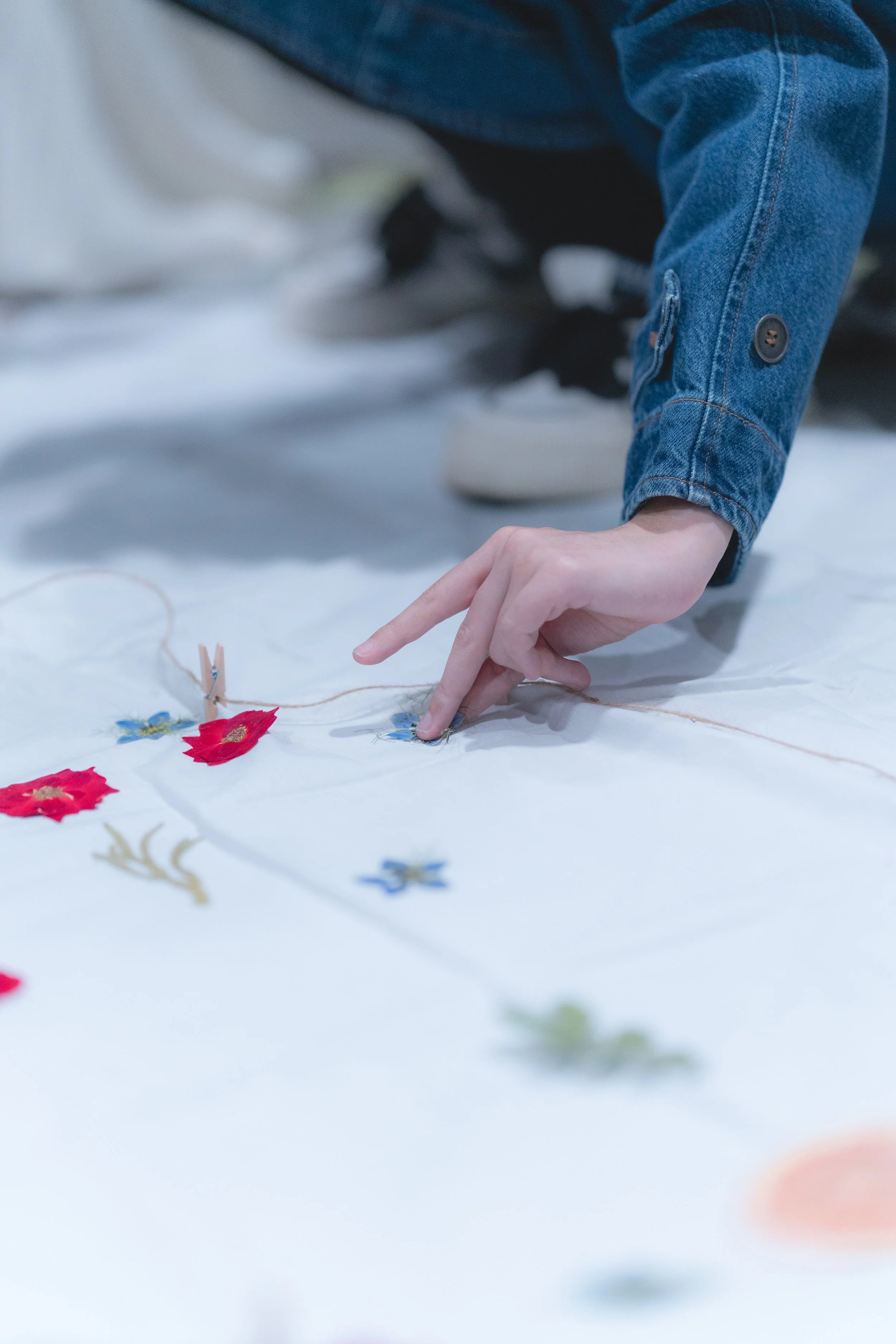
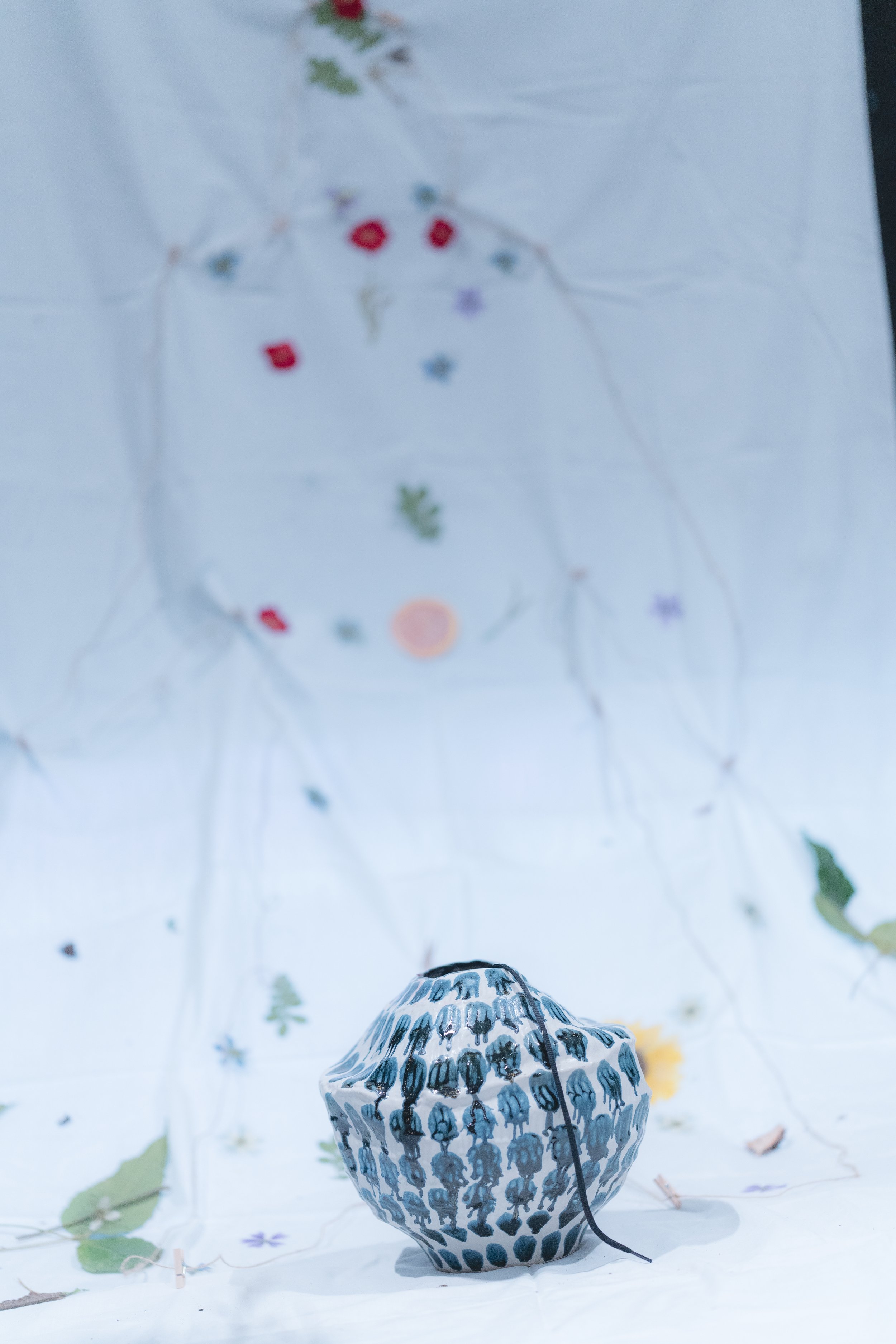
Developed on Gulangyu Island, this place-based work uses locally gathered plant matter as both material and score. Shaped through a workshop process, it culminates in a live performance that activates the main gallery through movement and spatial arrangement, while audiences use dried plants to map pain and tension on a human silhouette. The traces, documents, and reconfigured materials remain as an installation—an aftermath of the event.
Mirror’s statement for Mapping the body reads:
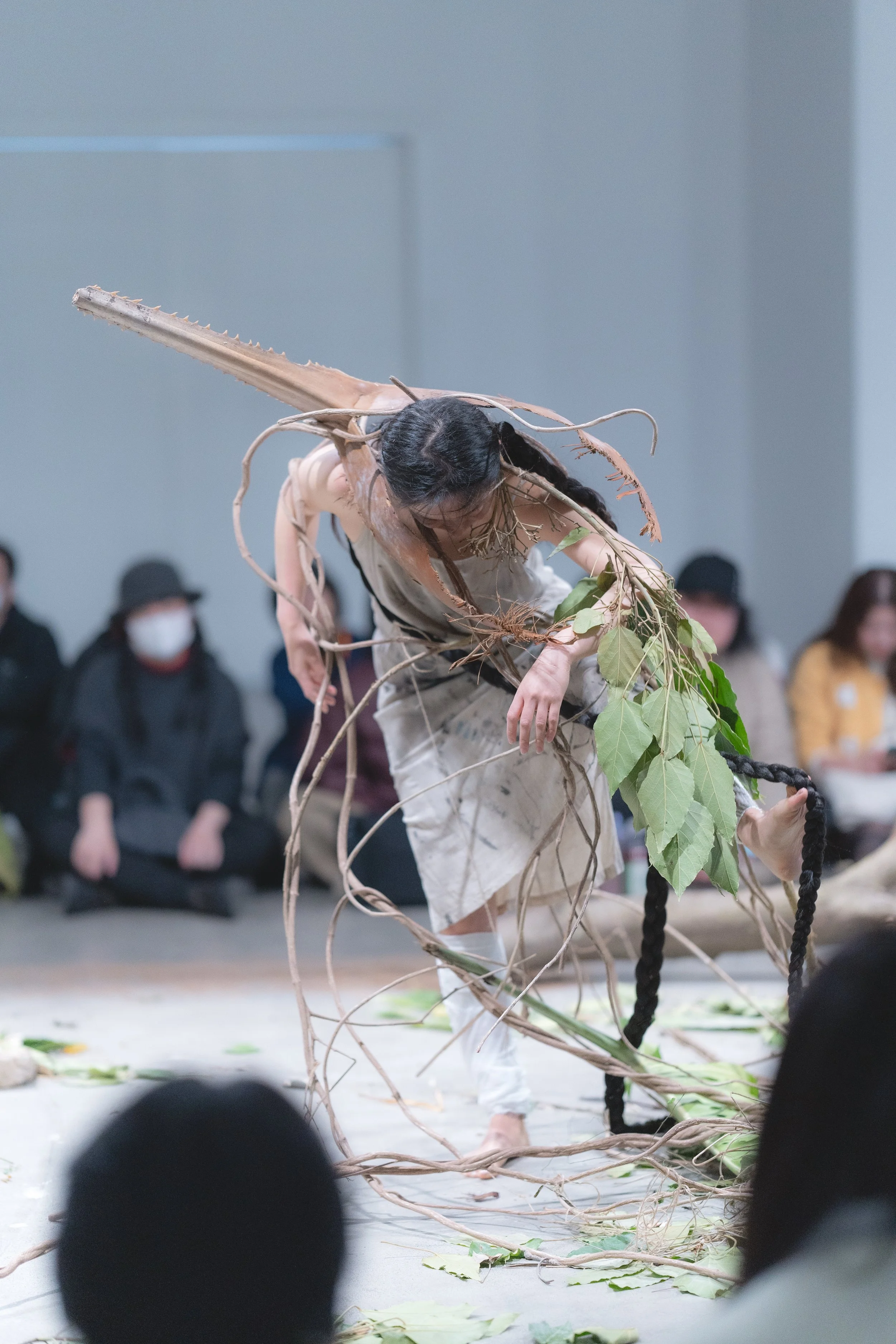
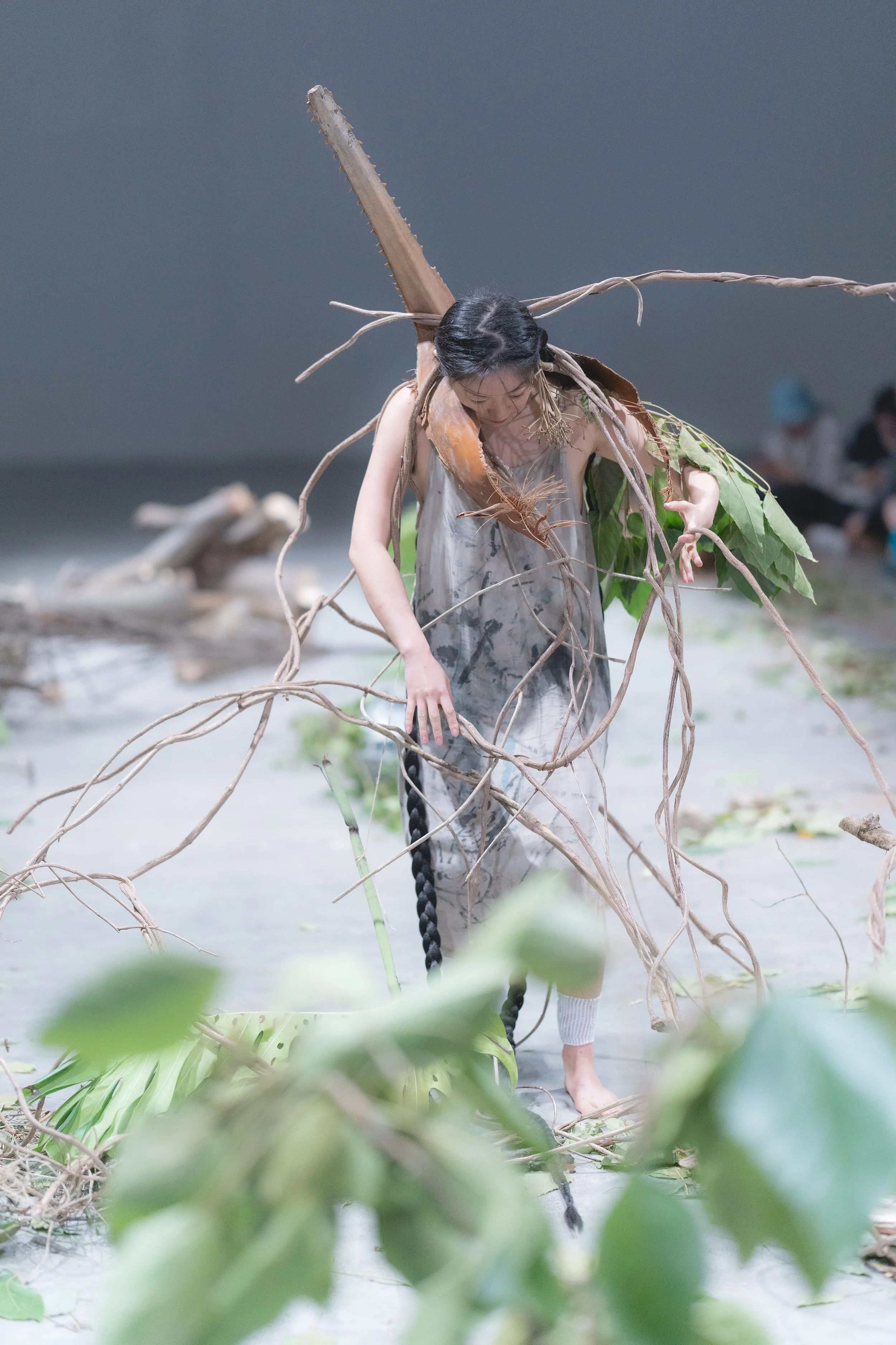
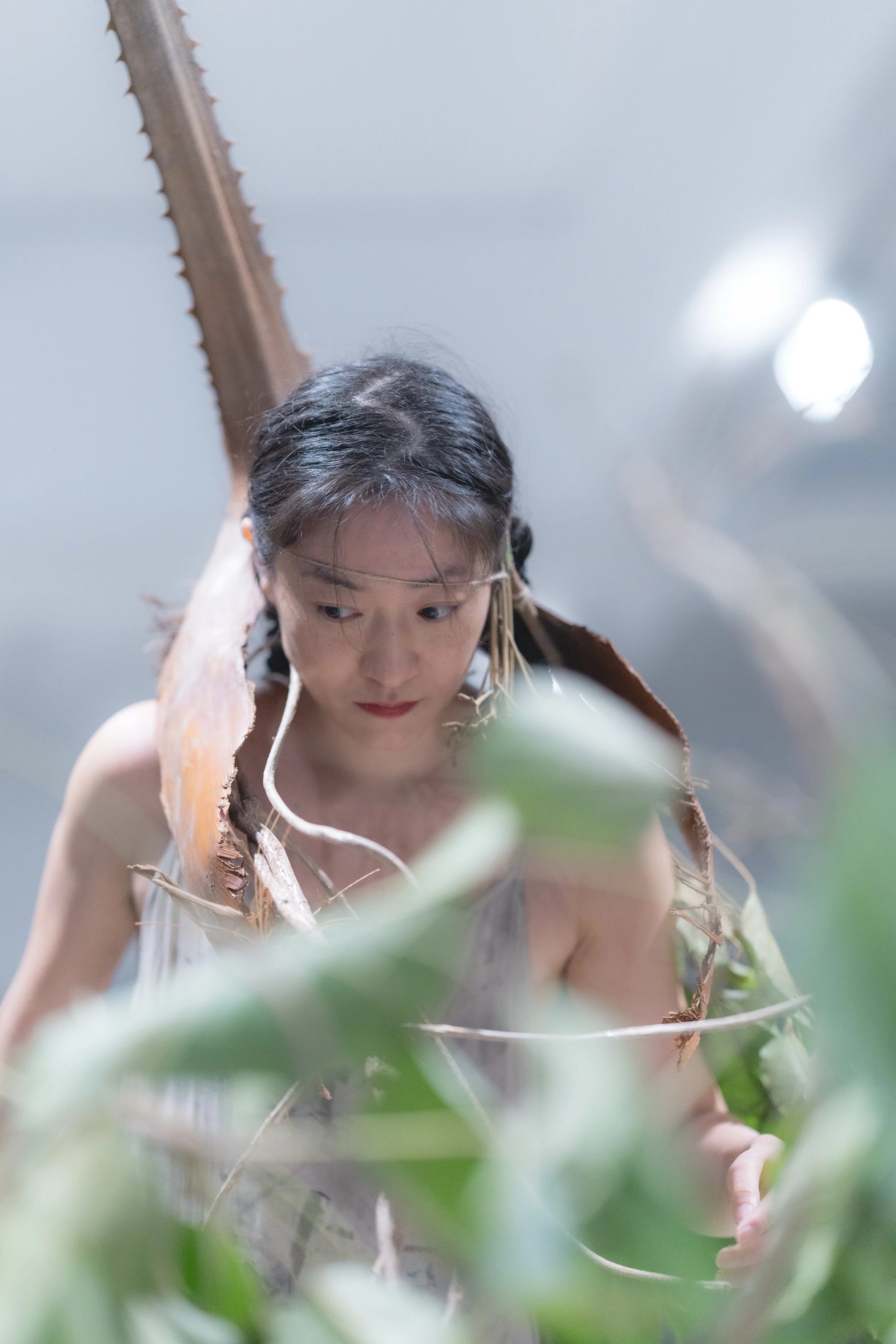
Mapping the Body is a body-map made with plants: an attempt to render pain and tension as a tangible landscape—something that can be touched, worn, and carried. The work begins with gathering: branches, leaves, vines, and dried fibers are brought into the space and gradually attached to the body. What starts as light contact becomes weight, drag, and entanglement—leaf against skin, vines around joints, branches pressing into the shoulders and back. The plant matter is not decoration; it functions as a shifting exoskeleton and a field of resistance that re-organises balance, breath, and attention, making the body’s hidden lines of strain visible.
In this process, the body is not positioned as the centre that controls nature, but as a co-existing organism—held, pulled, and slowed down by vegetal form. I submit to the material’s shape, hardness, fragility, and recoil, listening to how it breaks, bends, and returns force. Pain becomes more than an internal, private experience: it emerges as a relational structure in space—knots and pressure points, networks of tension, small acts of yielding and refusal.
Mapping the Body translates sensation into structure: tension into binding, pain into pathways. As the plants accumulate on the body, they settle like sediment—like memory. And as the body moves within their resistance, it continually rewrites itself, forming a fragile but persistent posture of coexistence. After the live action, the remaining branches, leaves, traces, and the altered site hold the work as an aftermath—an unfinished map that insists pain and ecology are not separate. They breathe on the same skin, on the same ground.
Photographs by Yu Zhang.