Artificial Loneliness
Macao · Shanghai · Hangzhou (2019–2020)
Artificial Loneliness is a commissioned work of Macao BOK Festival: a contemporary performance / performance-installation with moving image and live sound, developed across experimental theatre and live art contexts.
60 min
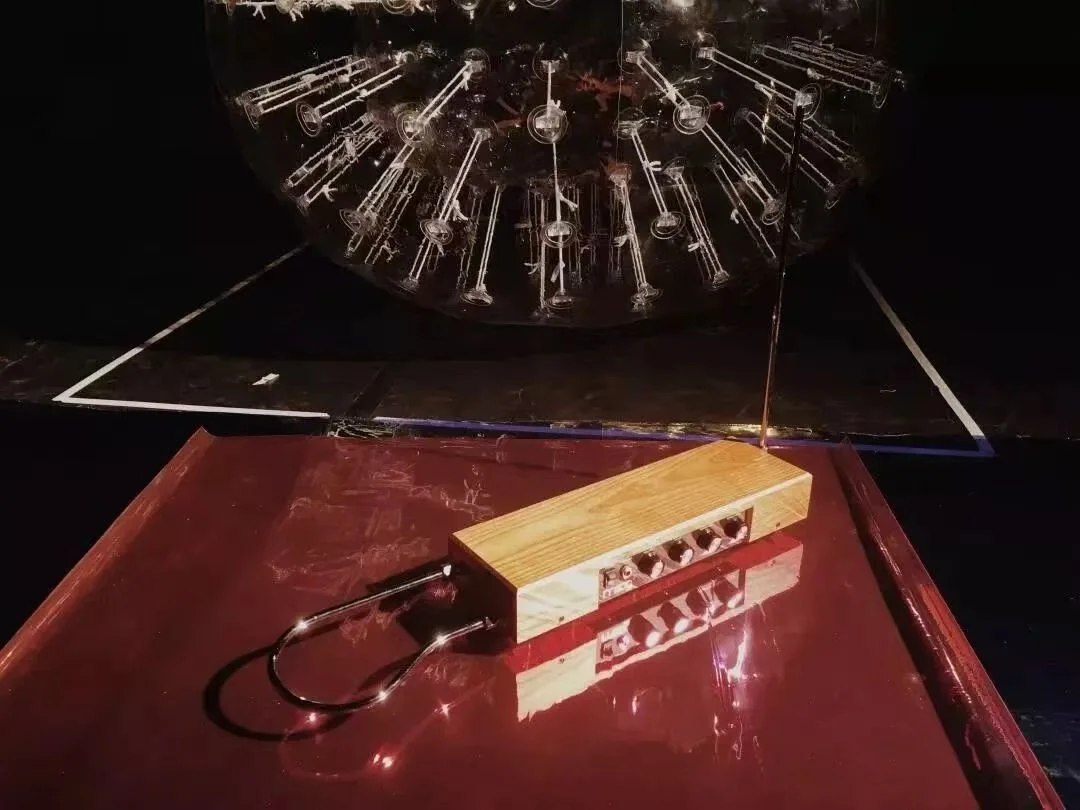
1 performer, 1 live musician (Theremin performed as the role of AI)
First Presented in 2019
Installation elements:
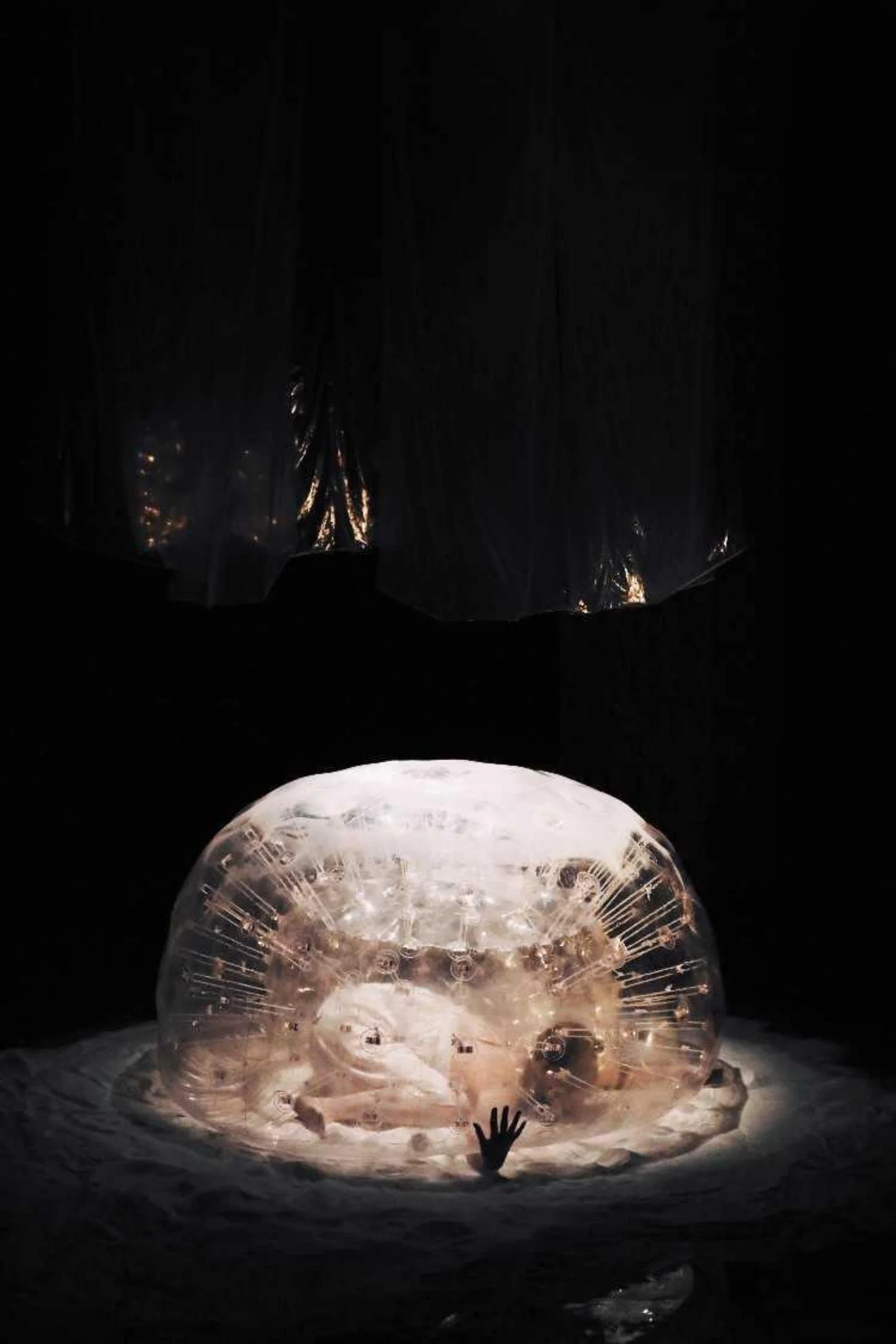
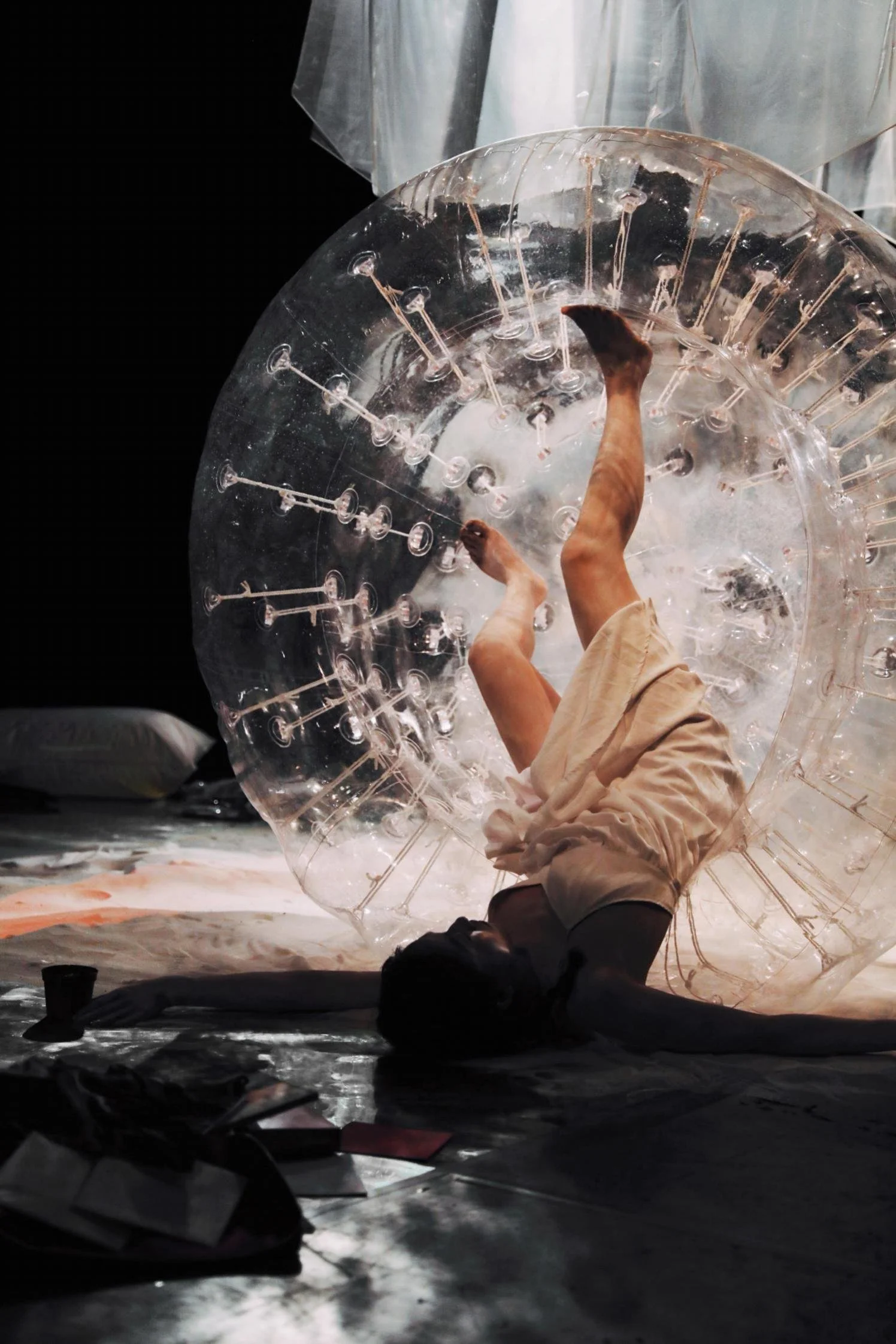
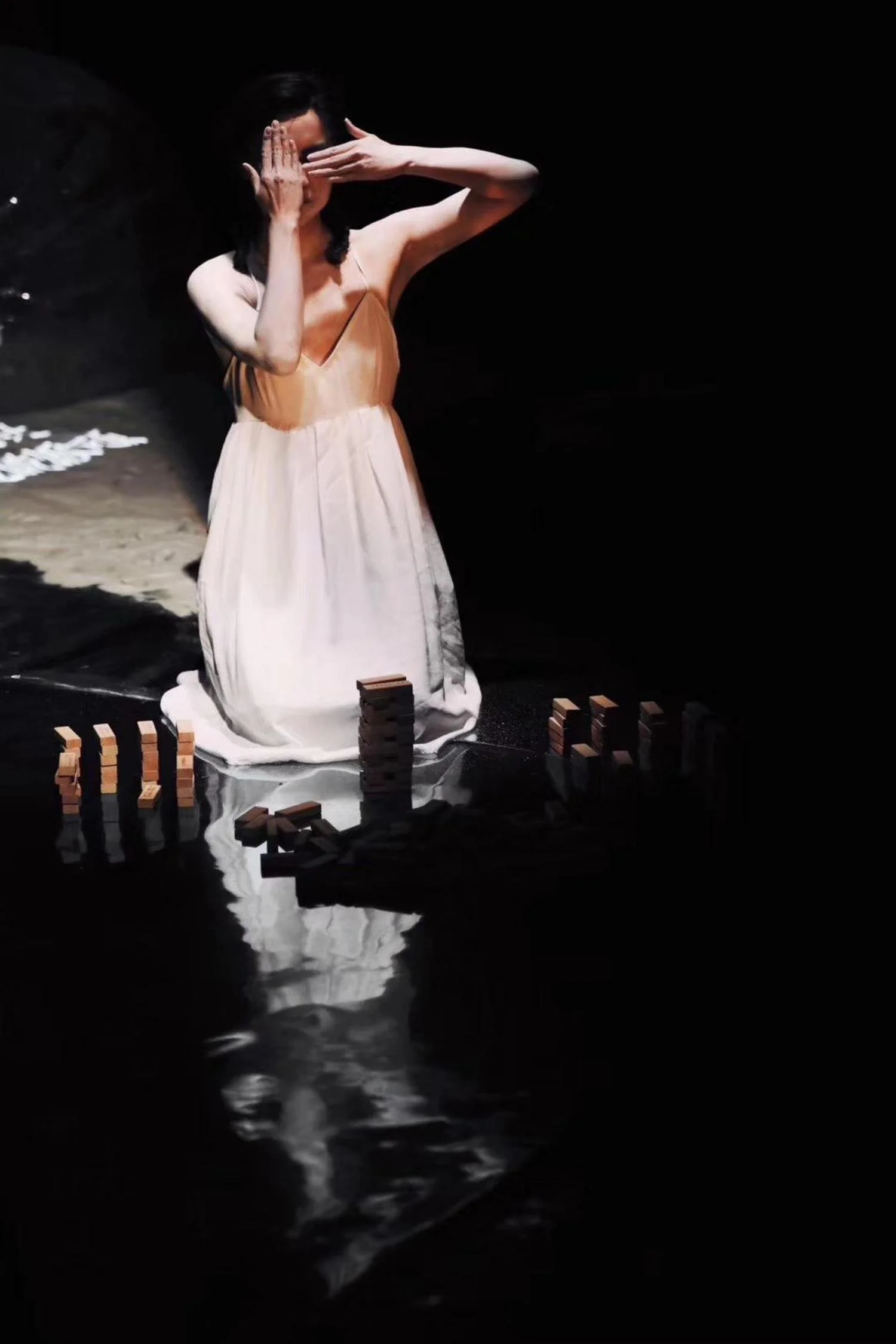
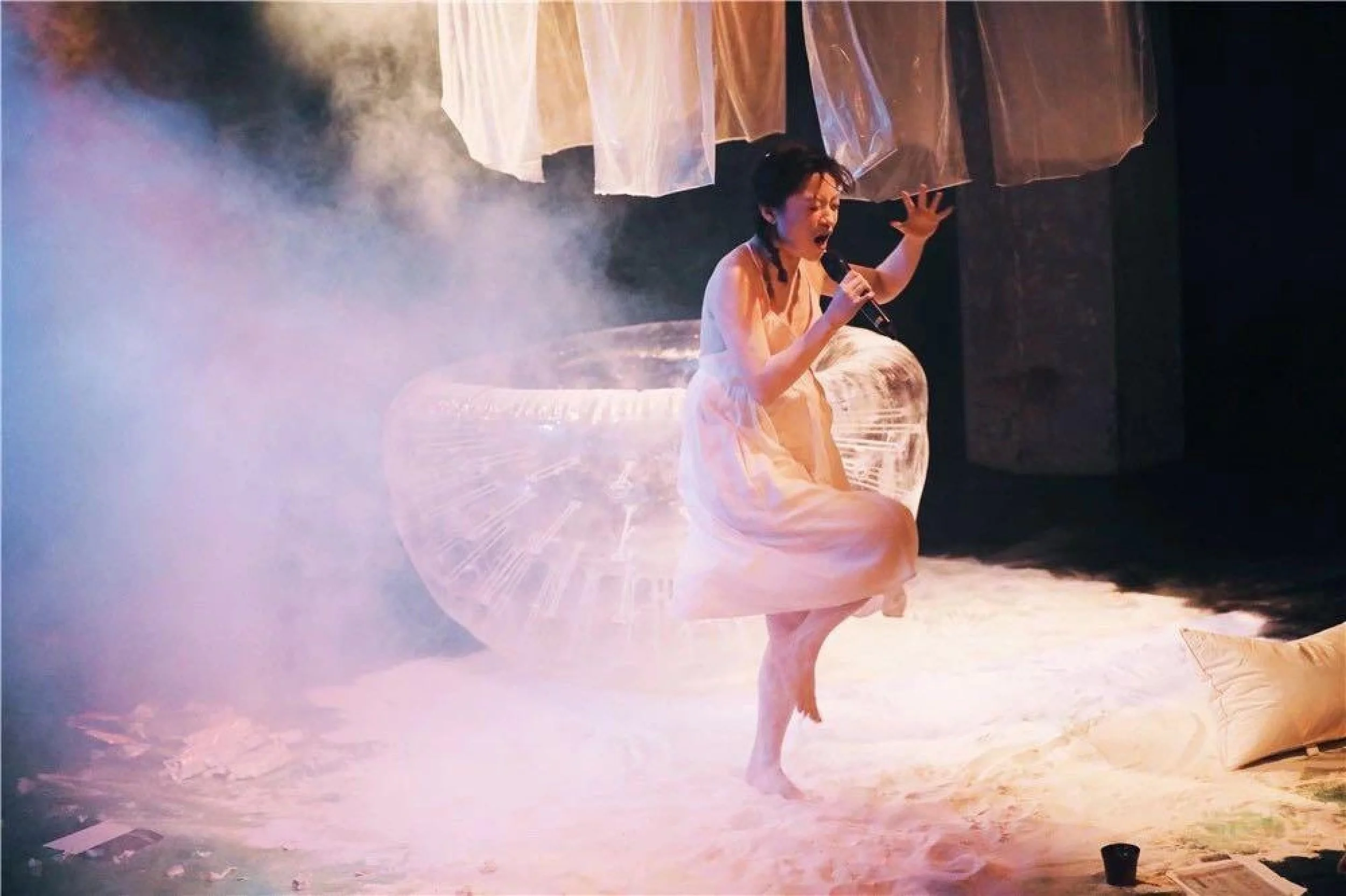
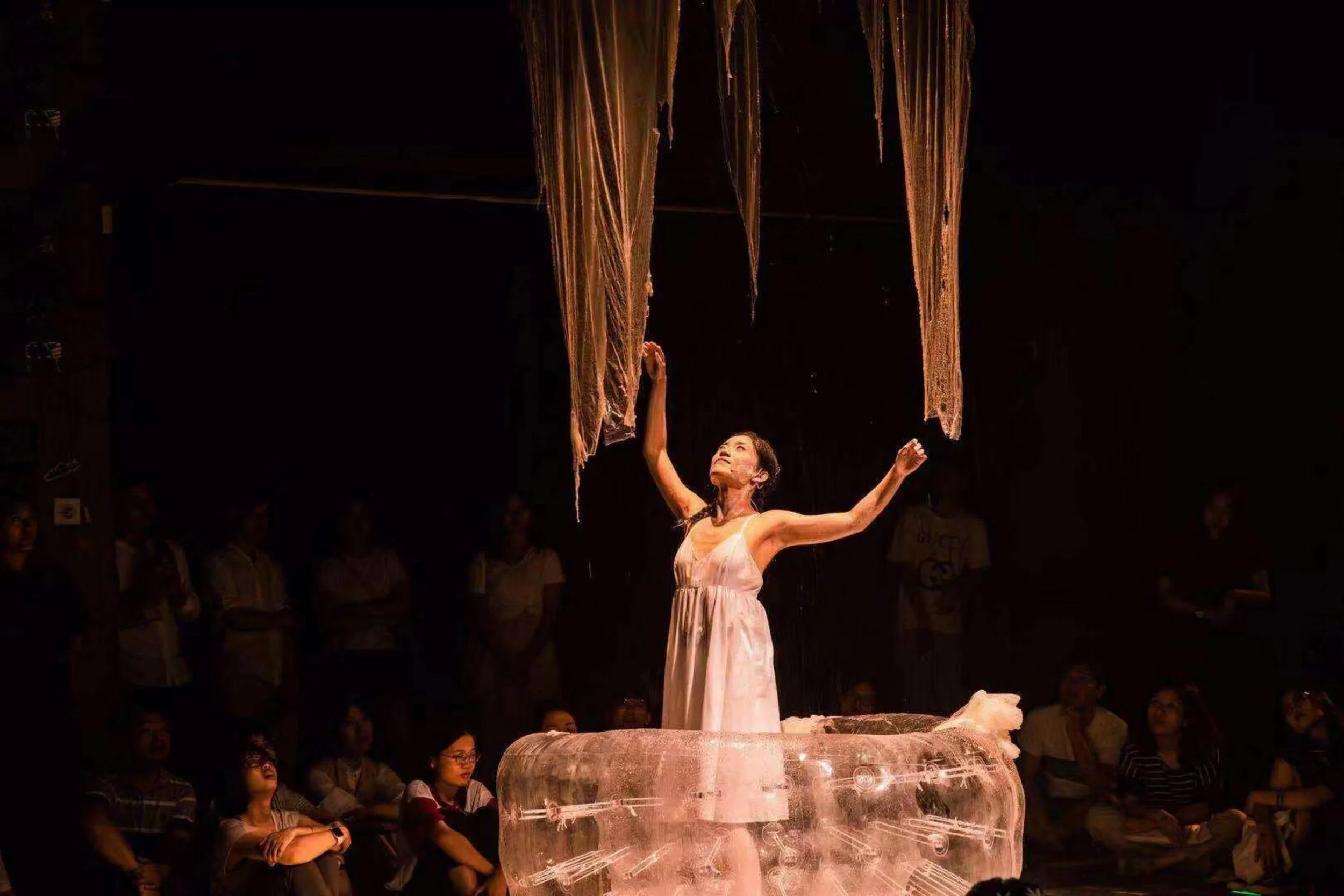
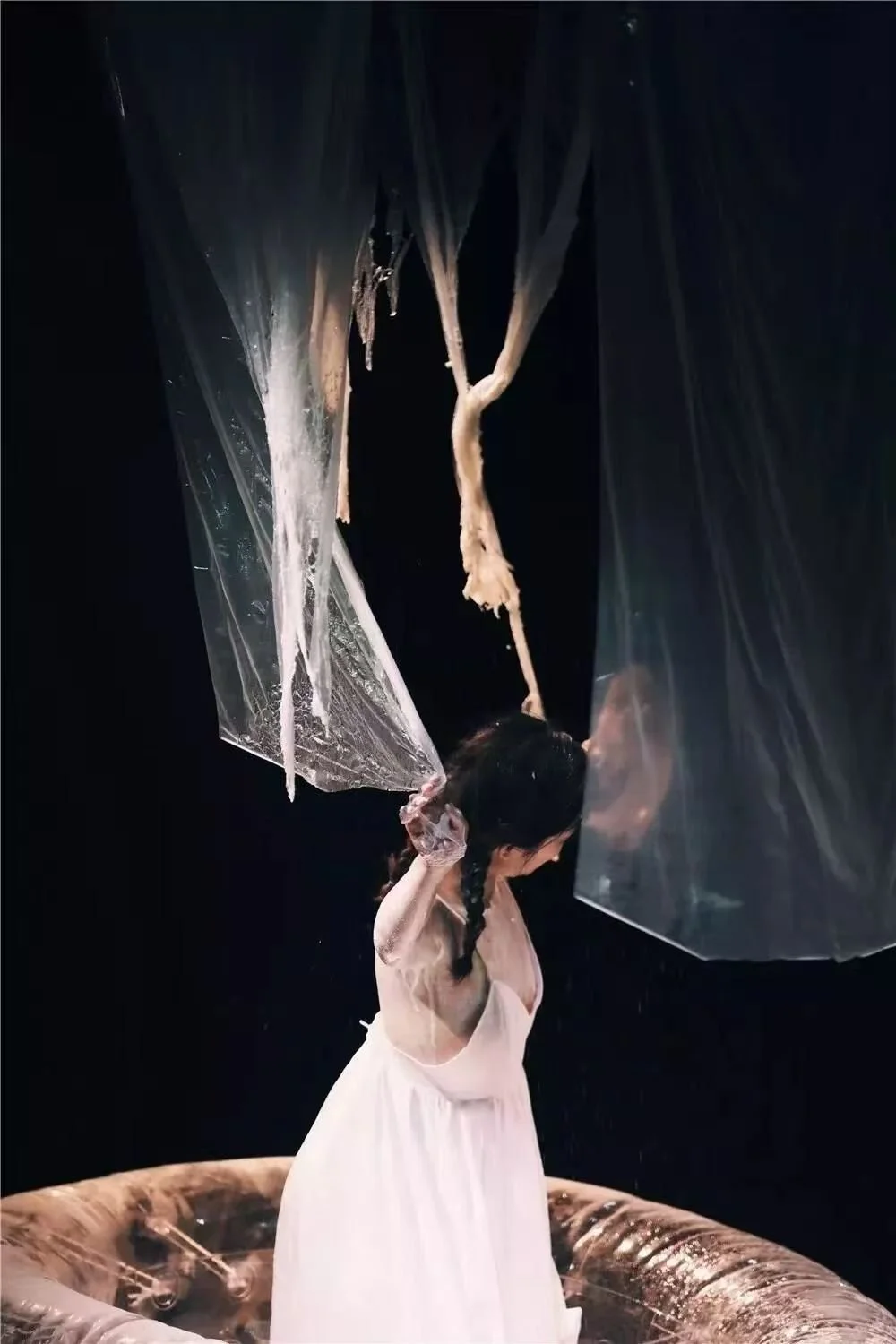
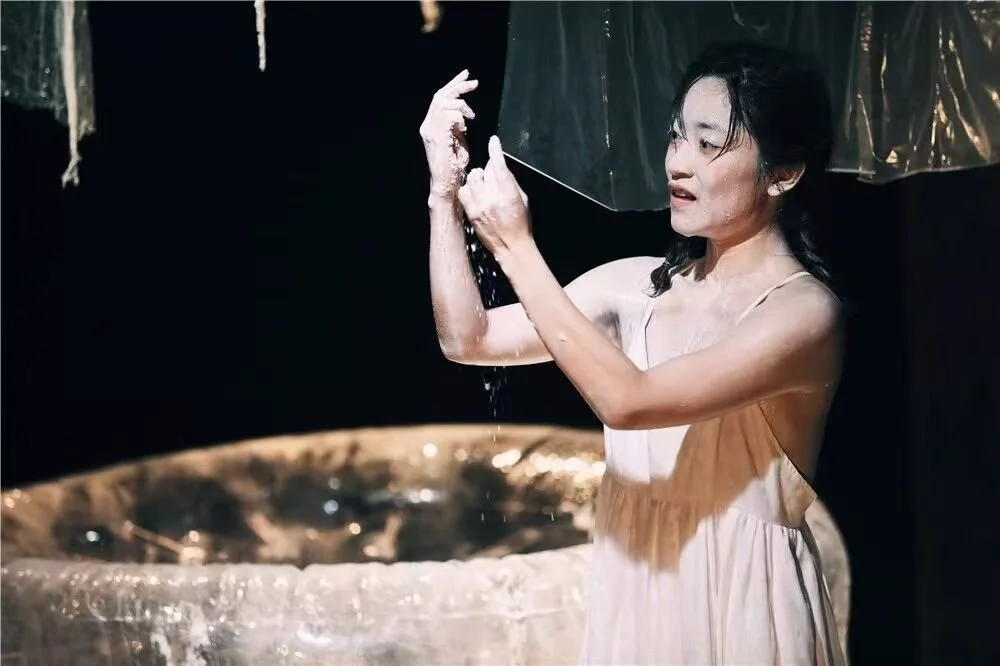
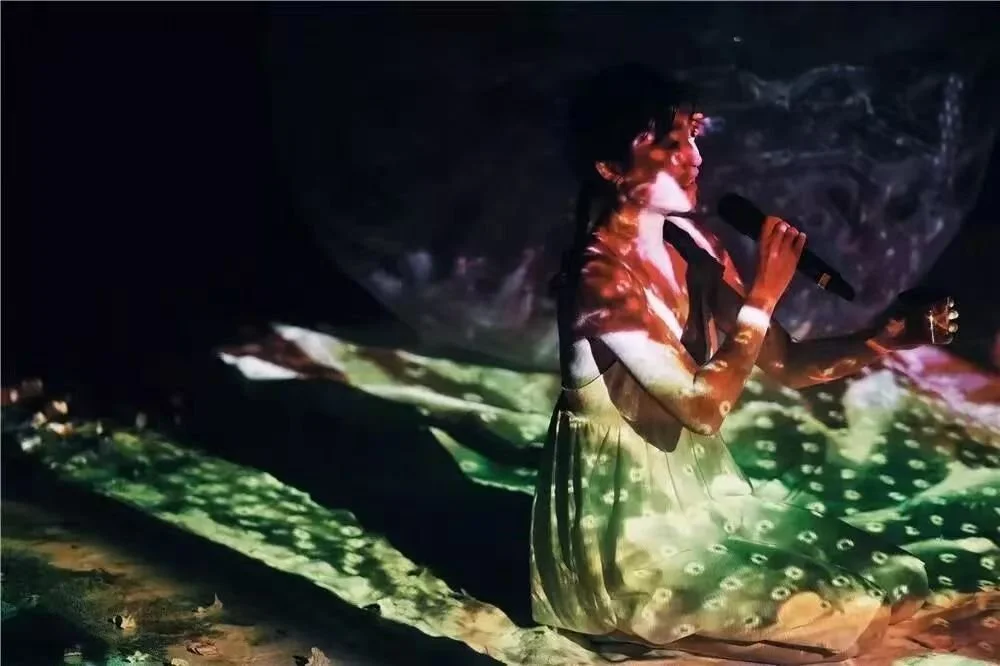
Inflatable bathtub, soluble shower curtain, white sand, mirrored floor mat, two projections, one palm size small plant
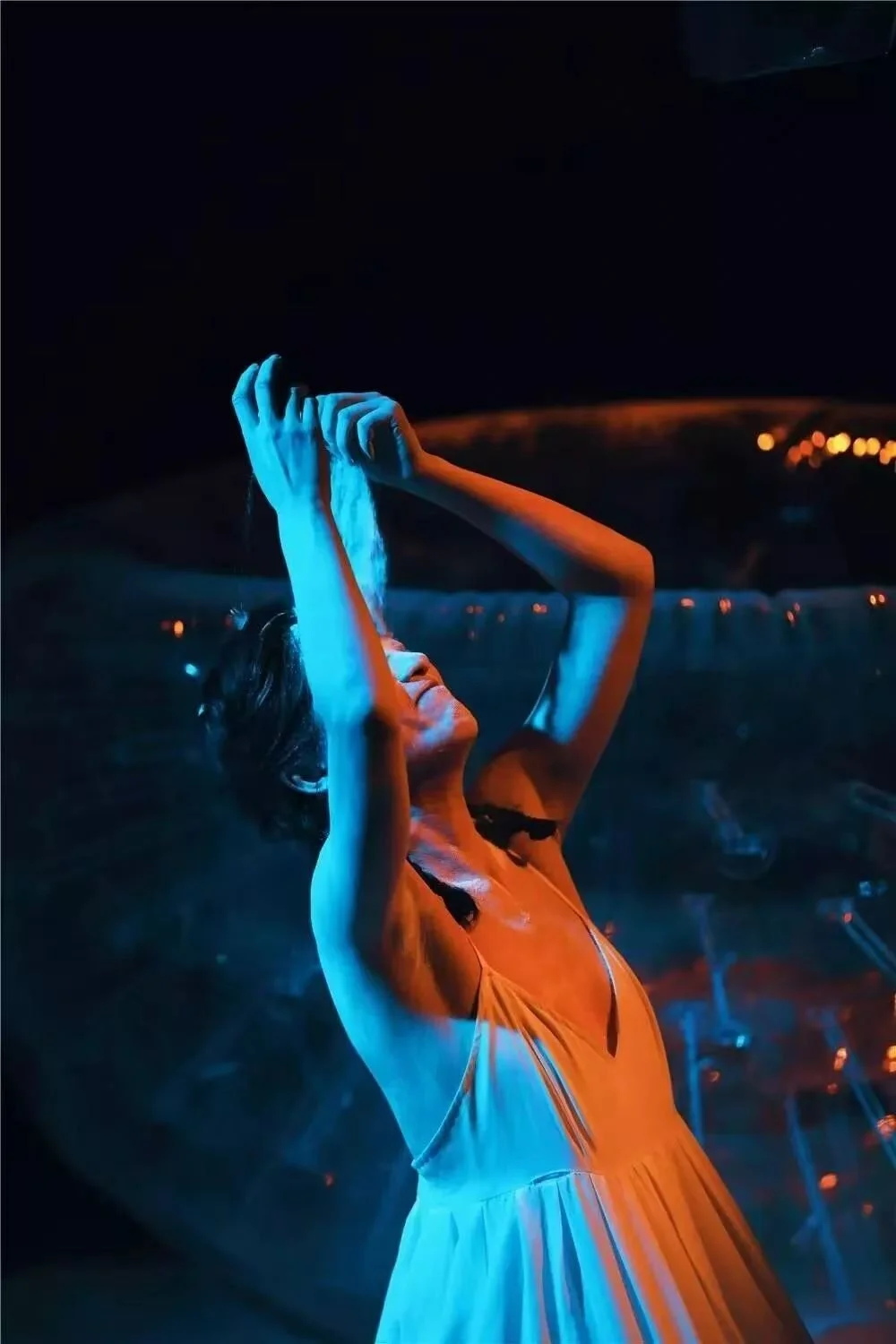
Artificial Loneliness centres on a solitary figure exiled in a separate space, attempting to teach an unintelligent artificial intelligence how to plan a perfect funeral. Through this absurd and darkly humorous premise, the work explores loneliness, disembodiment, alienation, memory, and self-acceptance, moving from artificiality and erasure through a ritualised self-funeral toward the gradual recovery of human presence.
In today’s accelerated society, people increasingly become tools within social machinery rather than its purpose. There is little time left to reflect on the essence of being human. The work places its figure within an artificially constructed condition of extreme loneliness, detached from society, opening a space for solitary reflection within an expanded sense of time.
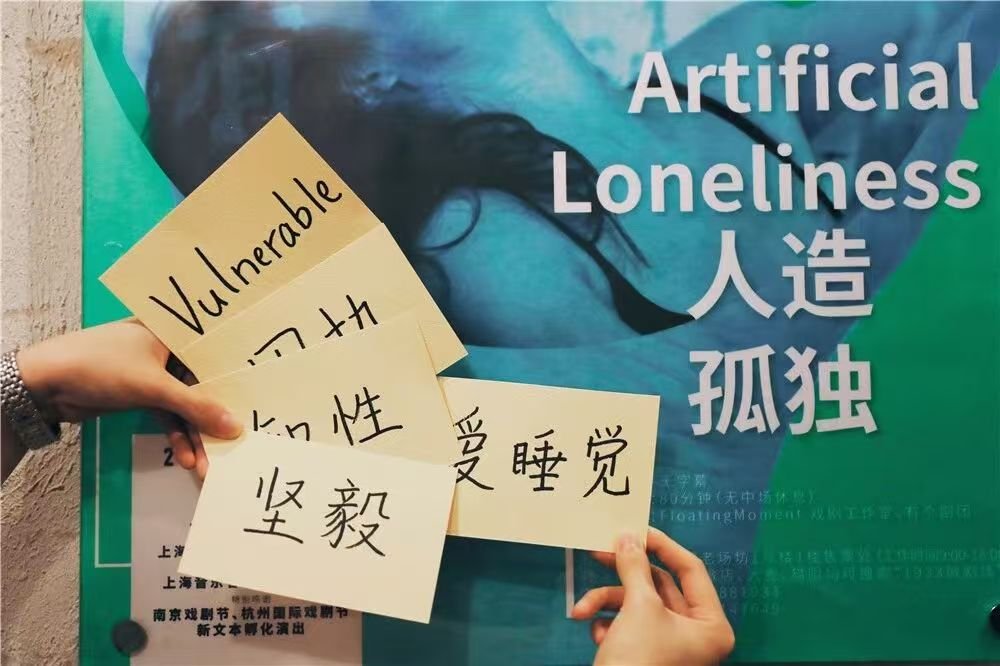
The work draws on both personal archive and participatory material. During the creative process, I collected words and descriptions used by people around me to describe me and turned them into hand cards. As the audience entered, they were invited to select words and record them; these recordings later returned during the water funeral as elegiac voices. The piece also incorporates personal documents — letters, diaries, greeting cards, and handwritten English postal forms used by my mother in China when sending parcels to me in the UK despite not speaking English. These materials appear both within the performance and as part of the installation, allowing the audience to approach them at close range.
Audience interaction runs throughout the work. Before the performance begins, while the audience is entering and waiting, a hypnotic audio is already playing, guiding them to briefly detach from their bodies, rise beyond the building and the Earth, and enter outer space. Later in the performance, viewers are invited to draw questions at random from a set of blocks, prompting reflection on their own thoughts and feelings. At another point, the audience is guided through a second hypnotic experience: within an imagined void, they are led to embrace the person they love most, only for that loved figure to gradually become themselves. Through this shift, the work opens onto recognition, intimacy, and the possibility of turning care back toward the self.
Across the performance, the protagonist gradually recovers human traits. In sound, the voice begins as raw, nonverbal utterance, then slowly forms syllables and words, entering into vocal and physical interaction with the live music performer. In movement, the body relearns itself, gradually recognising and using its limbs like an infant discovering its own physical existence. The work also draws on my childhood memory of attending my great-grandmother’s lively rural funeral, transforming that remembered atmosphere into the preparation of an imagined perfect funeral for oneself. The audience becomes both witness and participant in this transformation and funeral rite.
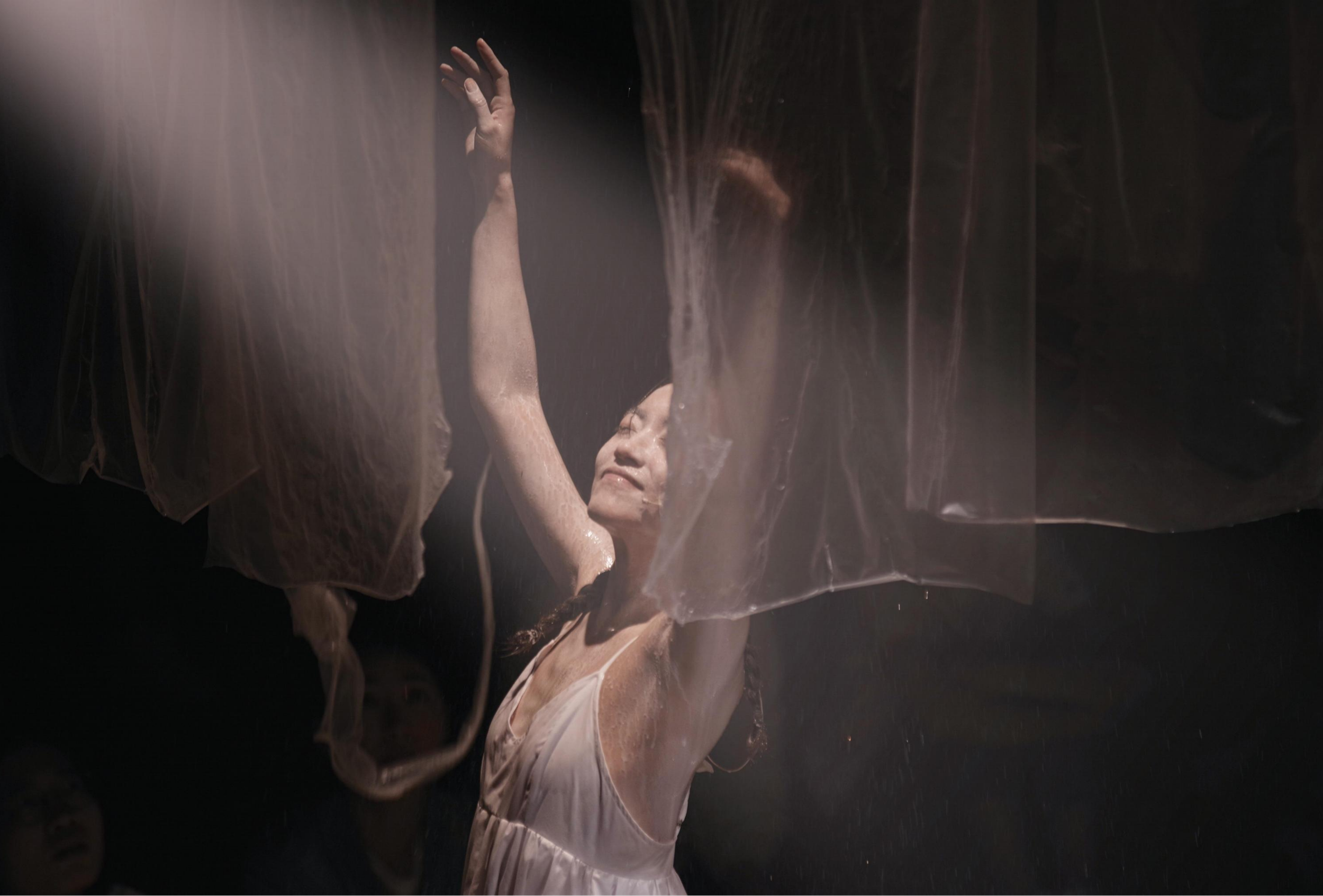
The body itself undergoes a gradual transformation. At the beginning, the skin is entirely covered in white paint, stripping the body of its ordinary human qualities and pushing it toward an anonymous, artificial state. By the end, through the water funeral, the white paint is gradually washed away, and the natural skin tone slowly reappears. Along with this, human features are progressively recovered. The passage from an erased body to a re-emerging human presence becomes a central image of the work’s movement toward recognition, return, and becoming human again.
The main performance area is built as a compact installation based on the functional logic of a shower: a transparent chamber below serves as a sleeping pod, while water and projection fall across suspended water-soluble material above, which dissolves during the final water funeral. Its compressed spatial logic evokes the confined conditions of life in outer space, while the alienated environment reflects the alienation of the human figure. The compact setting also brings the audience into close proximity, allowing intimate observation and interaction.
Festivals and venues
Commissioned by Macao BOK Festival
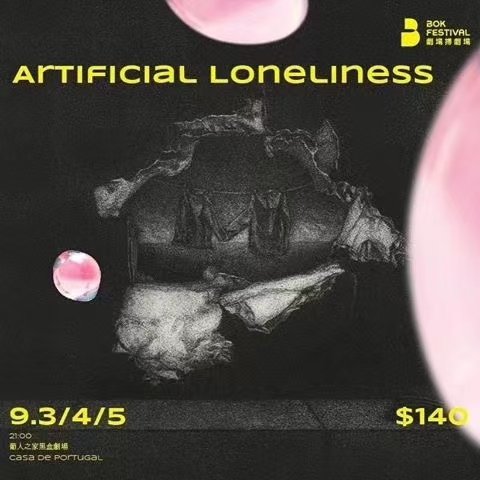
Casa de Portugal Black Box Theatre, Macao, 3–5 Sep 2019
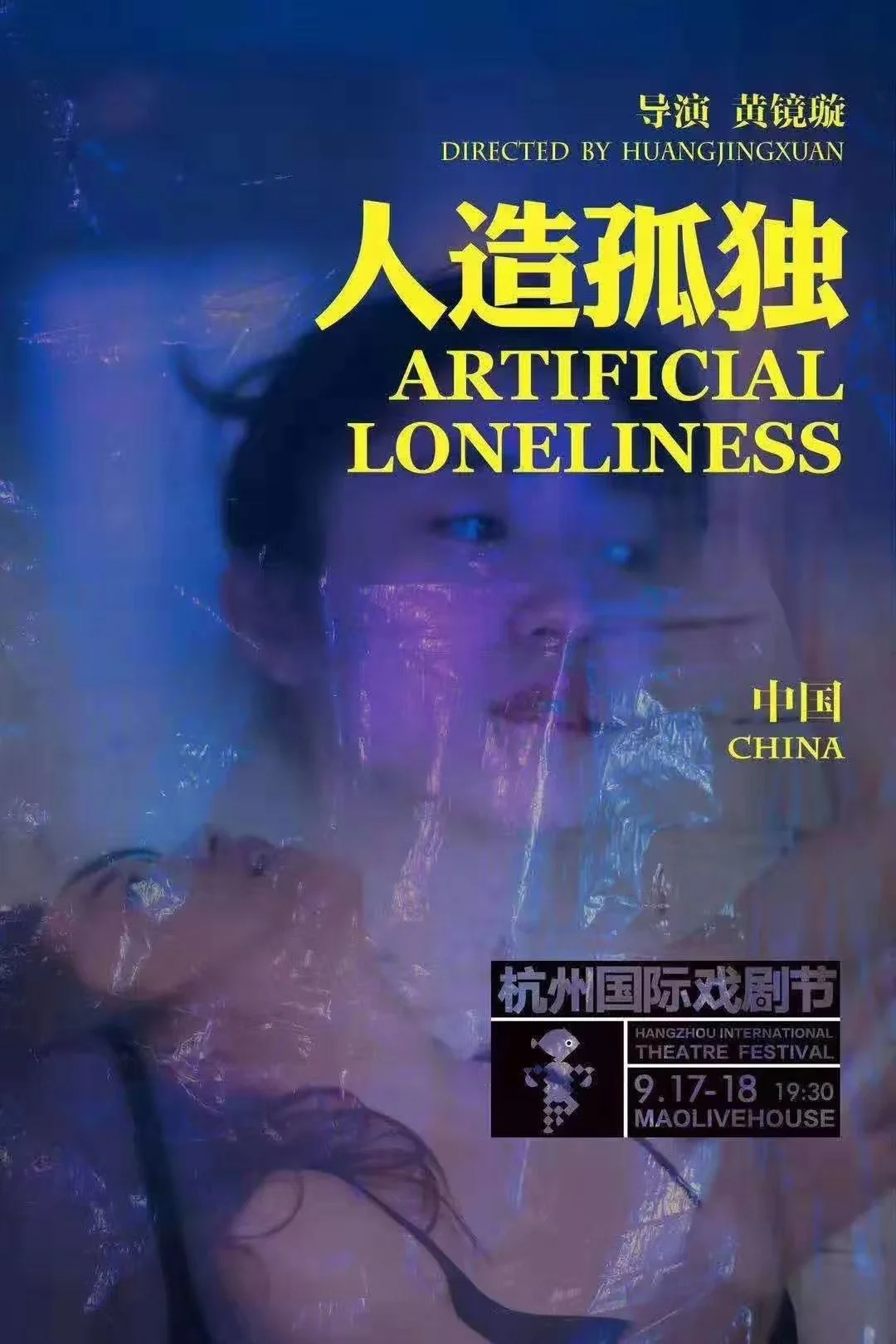
Invited production, Hangzhou International Theatre Festival
MAO Live House, Hangzhou, 17–18 Sep 2019
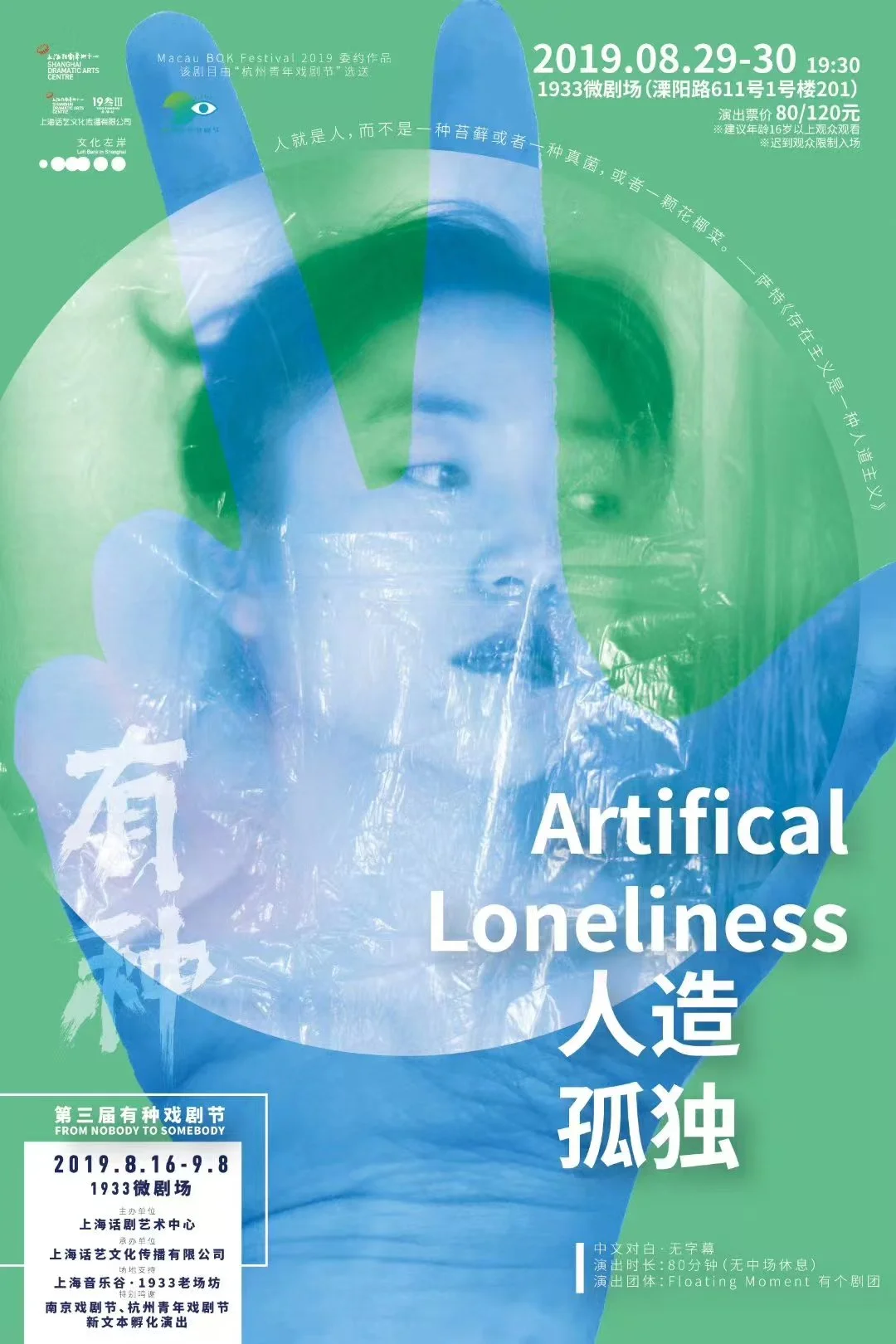
Invited production, 3rd Shanghai Youzhong Theatre Festival
1933 Micro Theatre, Shanghai, 29–30 Aug 2019
Additional presentations:
China Grand Theatre; Huangpu Theatre
Creative Team
Created / Performed / Written by: Mirror Huang Jingxuan
Dramaturgy: Mirror Huang Jingxuan, Tian Yuhe
Co-creation / Video Editing: Tian Yuhe
Music Design / Performance: Zhang Xiaochen
Scenography Development: Wang Yu
Technical Director: Ma Weigang
Movement Contribution: Zhu Hai
Text Contribution: Chen Xiao
Production Team
Producer / Featured Performer (Delivery Rider): Fang Danjie
Production Assistants: Wang Xueke, Pan Yue
Technical Assistant: Zhu Jiaqi
Publicity Coordinator: Dai Yifang
Special Thanks
Li Amei, Wen Lüyuan, Zhou Yiyun, Muyinge Guitar Studio (Shanghai)